Category Archives: Economics

Slim pickings in the risk premia extraction game

One of my favourite investing quotes is one from Jim Leitner in Steve Drobny’s excellent book “The Invisible Hands” where he said “investing is the art and science of extracting risk premia from financial markets over time“. Well, there is not much over-priced risk premia to extract these days!

A recent piece on CNBC highlighted the convergence in some sovereign yields as a result of Central Bank intervention in markets. The graph below shows how the 10 year government yield from Spain has converged on that of the US.

click to enlarge10 year Government Yields
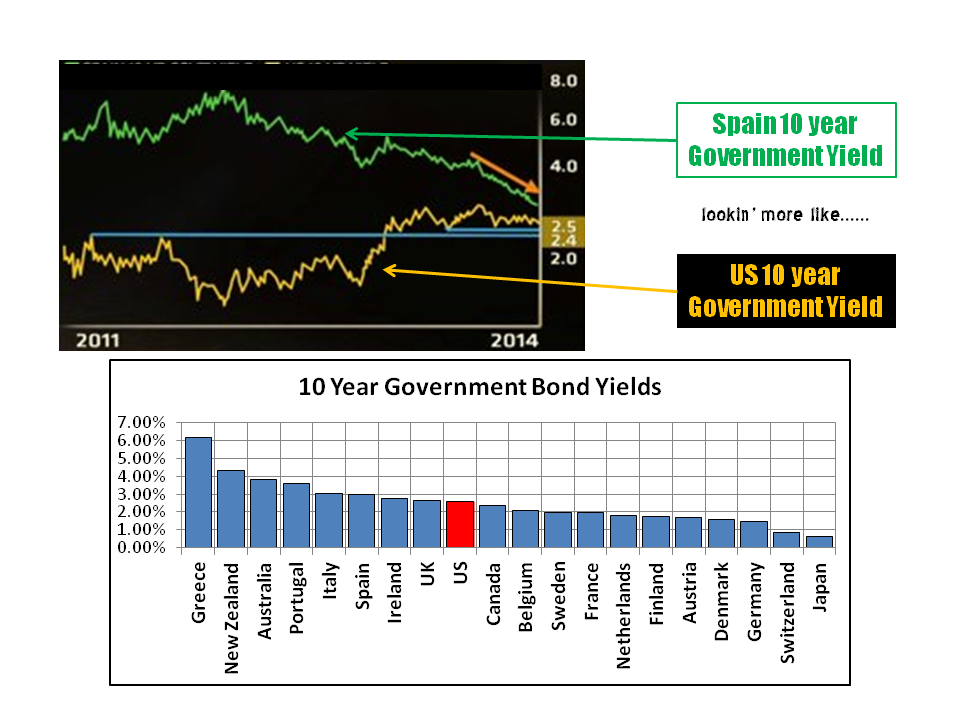
In fact, todays’ yields from Italy, Spain & Ireland are within 43, 38 & 15 basis points of the US! Does it make sense from a risk perspective that these countries are so closely priced compared to the US? Clearly not, market prices are being distorted by loose monetary policy across the developed world.

In today’s FT, Martin Wolf highlights the damage that low interest rates can do over the long term (it has been 5 years now after all). He finishes the article with this paragraph:

“Low interest rates are certainly unpopular, particularly with cautious rentiers. But cautious rentiers no longer serve a useful economic purpose. What is needed instead are genuinely risk-taking investors. In their absence, governments need to use their balance sheets to build productive assets. There is little sign that they will. If so, central banks will be driven towards cheap money. Get used to it: this will endure.”

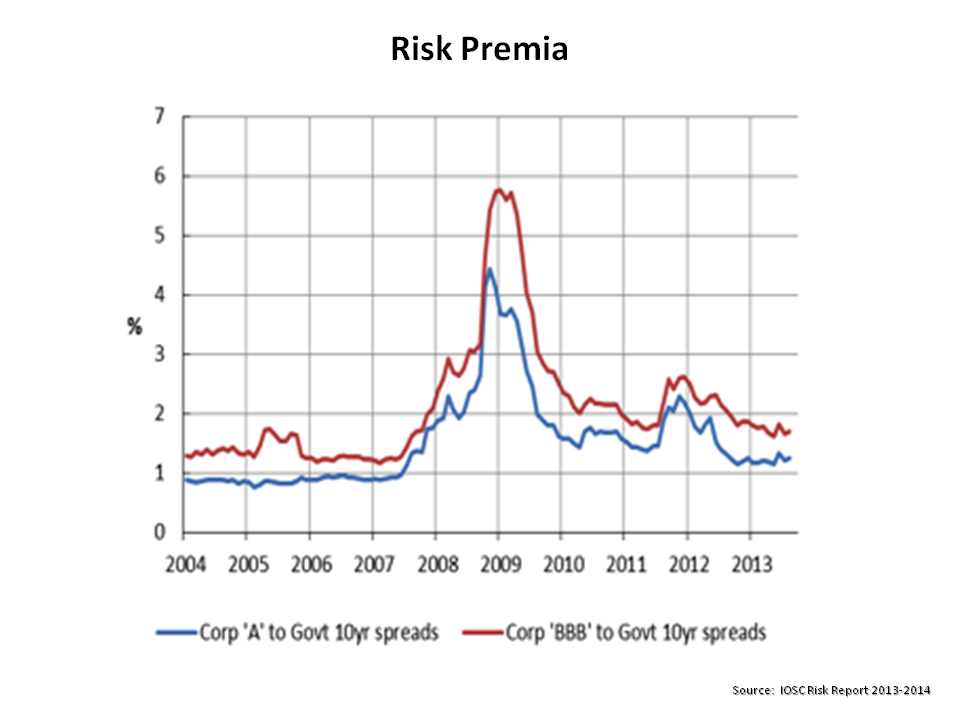
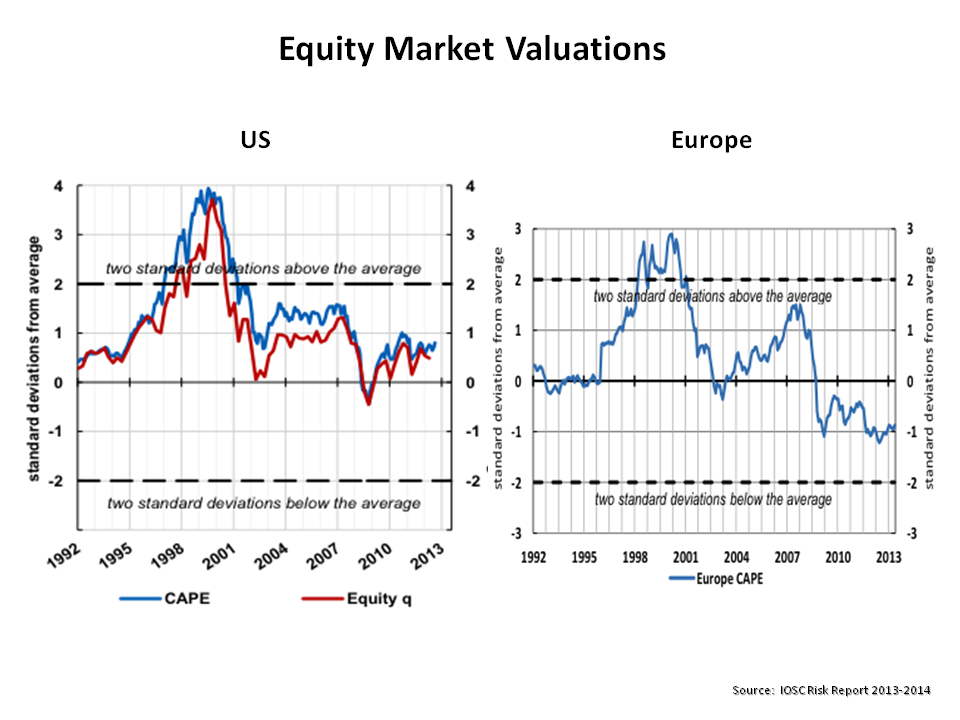
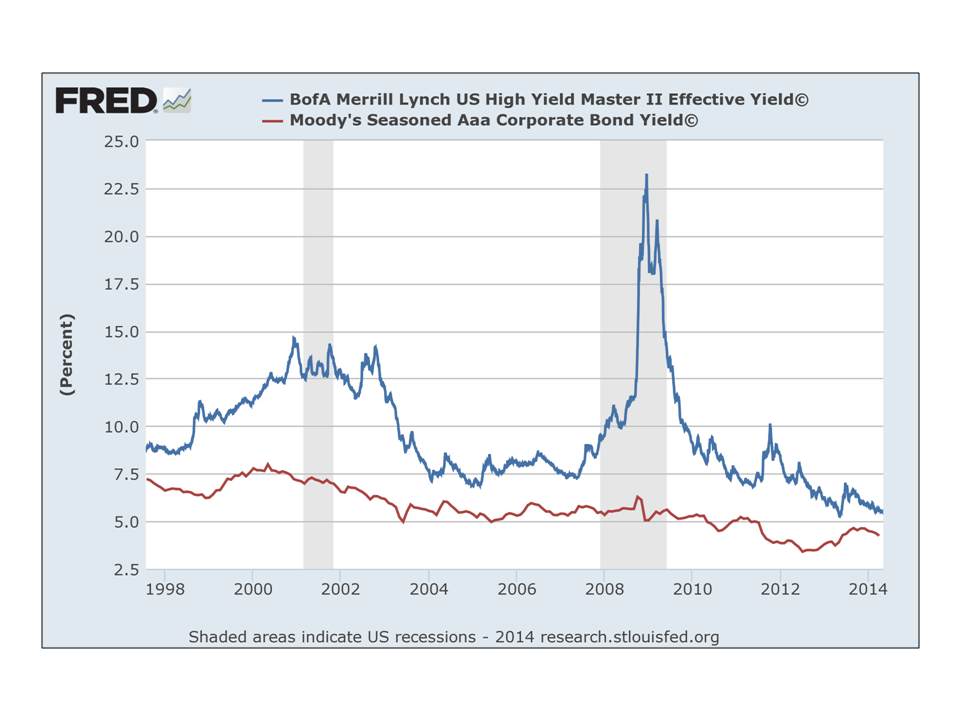
Examples of low risk premia are everywhere. From corporate spreads (as per the graph below), to the influx of capital into insurance linked securities (ILS), to inflated valuations in the stock market.

click to enlargeFRED graph high yield vrs corporate AAA
A recent Bloomberg article cites two market strategists – Chris Verrone of Strategas Research Partners and Carter Worth of Stern Agee – who recommend the purchase of insurance to protect against a stock market pullback. The article states the following:

“While we are not ready to sell stocks across-the-board — there’s still plenty of global support from central banks — we think insuring against a potential pullback makes sense. So we are buying an at-the-money put on the S&P 500 Index with a 30-day maturity. Specifically, we’re looking at the 187 strike put which expires June 6, 2014. It costs $2.54, which equates to 1.4 percent. This is a premium we’re happy to pay in order to sleep more soundly.”

As regular readers will know, I believe a cautious approach is justified in today’s market and, where risk positions have to be maintained, protection using instruments such as options should be sought (if possible). If investing is all about extracting risk premia over time and risk premia is currently mispriced across multiple markets, then the obvious thing to do is simply to go and do something else until those markets correct.

The difficulty is that central bank strategies, as Martin Wolf highlights, are centred on keeping risk premia artificially low over the medium term to stimulate growth through consumption. It is also worrying that when David Einhorn, the hedge fund manager, got to discuss longer term monetary strategy with Ben Bernanke at a dinner in March he concluded that “it was sort of frightening because the answers were not better than I thought they would be”.

One must look at one’s own behaviour….

That markets often behave irrationally, particularly over the short to medium term, is generally widely accepted today. Many examples can be cited to show that human behaviour does not restrict itself to the neo-classical view of rational player’s expected utility maximisation. The subject of the behavioural impact of humans in economics and finance is a vast and developing one which has and is the subject of many academic papers.

As a result of a recent side project, I have had cause to dig a little bit deeper into some of the principles behind behavioural economics and finance. In particular my attention has been caught by prospect theory, so named from the 1979 paper “Prospect theory decision making under risk” by Amos Tversky and Daniel Kahneman (who received a Nobel Prize in 2002 for his work on the subject), largely seen as the pioneers of behavioural economics and finance. In essence, prospect theory asserts that humans derive utility differently for losses and gains relative to a reference point.

My limited knowledge on the topic has been tweaked by a paper from Nicholas Barberis in 2012 entitled “Thirty Years of Prospect Theory in Economics: A Review and Assessment”. Although Barberis states that “while prospect theory contains many remarkable insights, it is not ready made for economic applications”, he highlights some recent research that may “eventually find a permanent and significant place in mainstream economic analysis.

Tversky and Kahneman updated the 1979 original prospect theory in 1992 to overcome initial limitations, so called cumulative prospect theory, based upon four elements:

1)    Reference Dependence – people derive utility from gains and losses relative to a reference point (rather than from absolute levels).

2)    Loss Aversion – people are much more sensitive to losses rather than gains of the same magnitude.

3)    Diminishing Sensitivity – people are risk averse in relation to gains (e.g. prefer certainty) but risk seeking in relation to losses.

4)    Probability Weighting – people weight probabilities not by objective probabilities but rather by decision weightings (e.g. objective weightings transformed by their risk appetite).

Graphically cumulative prospect theory is represented below.

click to enlargeProbability Weighting

Barberis highlights a number of sectors where prospect theory, as a model of decision making under risk, has applications. I will only comment on areas of interest to me, namely finance and insurance.

Probability weighting highlights that investors overweight the tail of distributions and numerous studies confirm that positively skewed stocks have lower average returns than would otherwise be suggested by expected utility investors. In other words, investors overestimate the probability of finding the next Google. This explains the lower average return of classes such as distressed stocks, OTC stocks, and out of the money options.

Loss aversion has also been used to explain the equity premium compared to bonds (i.e. returns have to be higher to compensate investors for volatility). Using an assumption called “narrow framing” investors evaluate separate risks according to their characteristics. This has also been used to explain why many people don’t invest in the stock market.

Prospect theory is also used to explain one long standing failure of investor behaviour, namely selling winners too early and holding on to losers too long. This is something that I have learned from experience to my determent and one piece of advice that many professional investors emphasis again and again. This characteristic was highlighted in research as far back as 1985 in a paper by Shefin and Statman. Further research to formalise this “disposition effect” is on-going and much debated. Other research focuses on the impact of “realisation” utility when it comes time to sell a stock (e.g. we derive more utility in selling a winner).

In the insurance area, prospect theory has been used to explain consumers purchasing behaviour. For example, if we overweight tail events then we likely
purchase too much insurance, at too low a deductible! Purchasing of a product such as an annuity is also impacted by our mentality of being risk adverse on gains/risk seeker on losses. The consumer is therefore more sensitive to a potential “loss” on an annuity by dying earlier than expected as opposed to a “gain” by living longer. One area that has proven difficult in using prospect theory is to understand what reference point people use in making decisions such as the purchase of an annuity.

There have been recent criticisms on the use of behaviour theories in finance and economics. Daniel Kahneman himself, whilst promoting the paperback launch of his 2011 bestselling book “Thinking, Fast and Slow” expressed his frustration at the blasé labelling of a divergence of social science as behavioural economics – “When it comes to policy making, applications of social or cognitive psychology are now routinely labeled behavioral economics”.

Another recent report entitled “How Behavioural Economics Trims Its Sails and Why” by Ryan Bubb and Richard Pildes claims that some policymakers naive embrace of the new field may actually be doing more harm than good. The report states that “fuller, simpler, and more effective disclosure, one of the main options in behavioural economic’s arsenal, is not a realistic way, in many contexts, to rectify adequately the problems in individual capacity to make accurate, informed judgments with the appropriate time horizons.” The report cites examples such as opt-out options in automatic enrolment of retirement savings and disclosure on teaser rates in credit products that claimed to offer reasoned choices to consumers but ultimately led to unintended economic impacts.

It is ironic (and probably inevitable) that some features designed to modify behaviour backfire given that, in the words of behavioural economist Dan Ariely, the premise of the theory is that “we are fallible, easily confused, not that smart, and often irrational.

Historical US Interest Rates

A fascinating graph from Louise Yamada on 22o years of US interest rates. The infamous technical analyst uses the 30 year rate since 1977 and prime corporate rates for the prior period.

click to enlarge200 years of US interest rates

QE effects and risks: McKinsey

McKinsey had an interesting report on the impact of QE and ultra low interest rates. There was nothing particularly earth shattering about what they said but the report has some interesting graphs and commentary on the risks of the current global monetary policies.

The main points highlighted included:

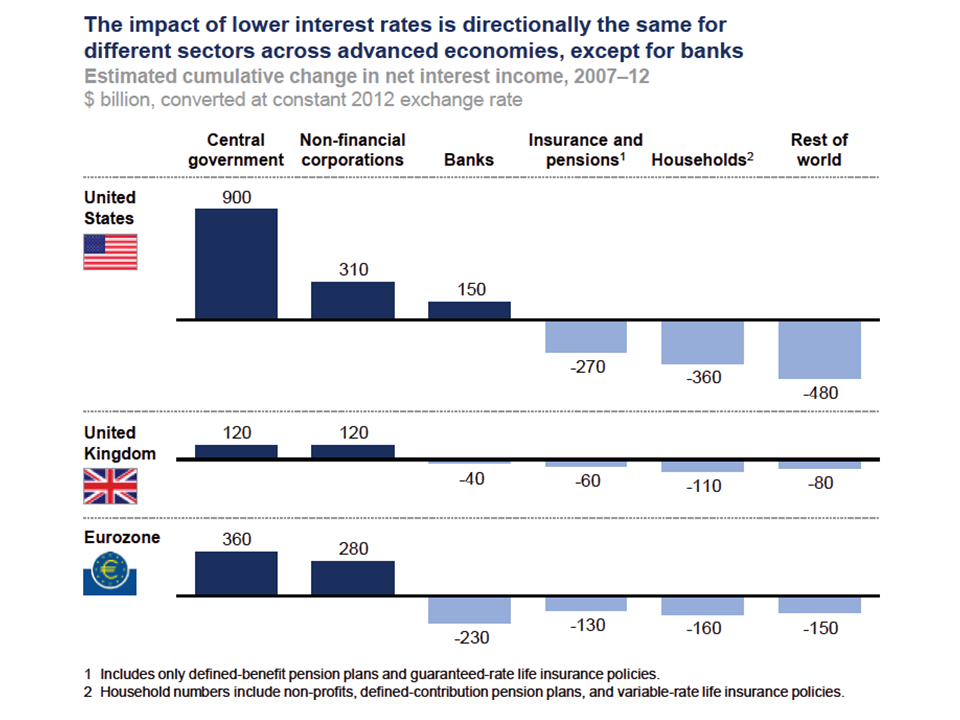
  • By the end of 2012, governments in the US, the UK, and the Eurozone had collectively benefited by $1.6 trillion (through reduced debt service costs and increased central bank profits) whilst households have lost $630 billion in net interest income (impacting those more dependent upon fixed income returns).
  • Non-financial companies across the US, the UK, and the Eurozone have benefited by $710 billion through lower debt service costs. This boosted corporate profits by about 5%, 3% and 3% for the US, UK and Eurozone respectively. The 5% US boost accounted for approx 25% of profit growth for US corporates.
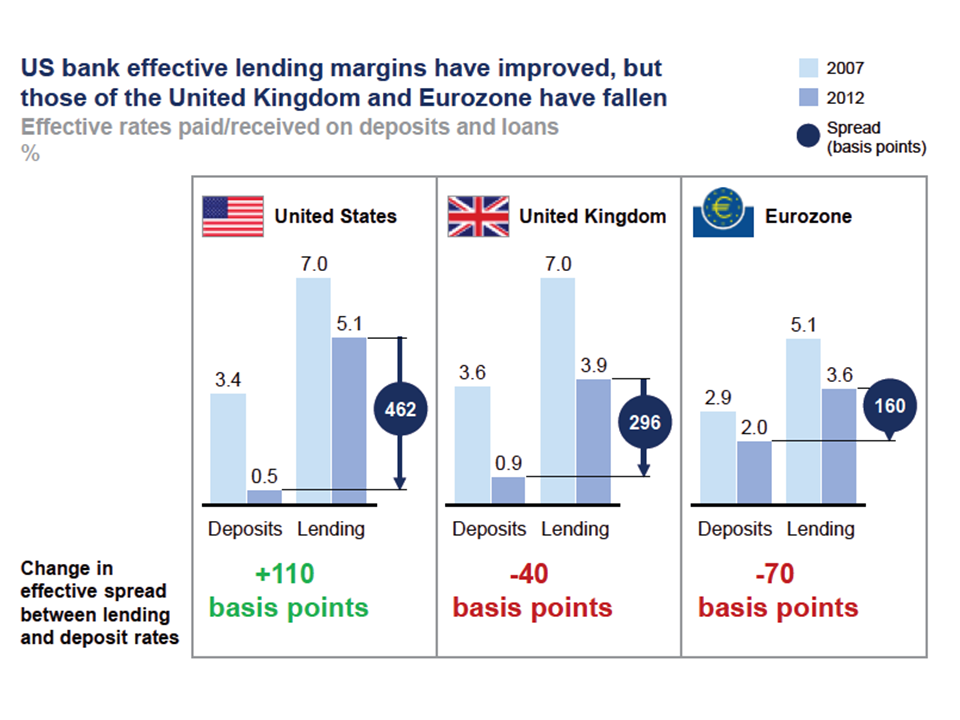
  • Effective net interest margins for Eurozone banks have declined significantly and their cumulative loss of net interest income totalled $230 billion between 2007 and 2012. Banks in the US have experienced an increase in effective net interest margins by $150 billion as interest paid on deposits and other liabilities has declined more than interest received on loans and other assets. The experience of UK banks falls between these two extremes.
  • Life insurance companies, particularly in several European countries where guaranteed returns are the norm (e.g. Germany), are being squeezed by ultra-low interest rates. If the low interest-rate environment were to continue for several more years, many insurers who offered guaranteed returns would find their survival threatened.
  • The impact of ultra-low rate monetary policies on financial asset prices is ambiguous. Bond prices rise as interest rates decline and, between 2007 and 2012, the value of sovereign and corporate bonds in the US, the UK, and the Eurozone increased by $16 trillion.
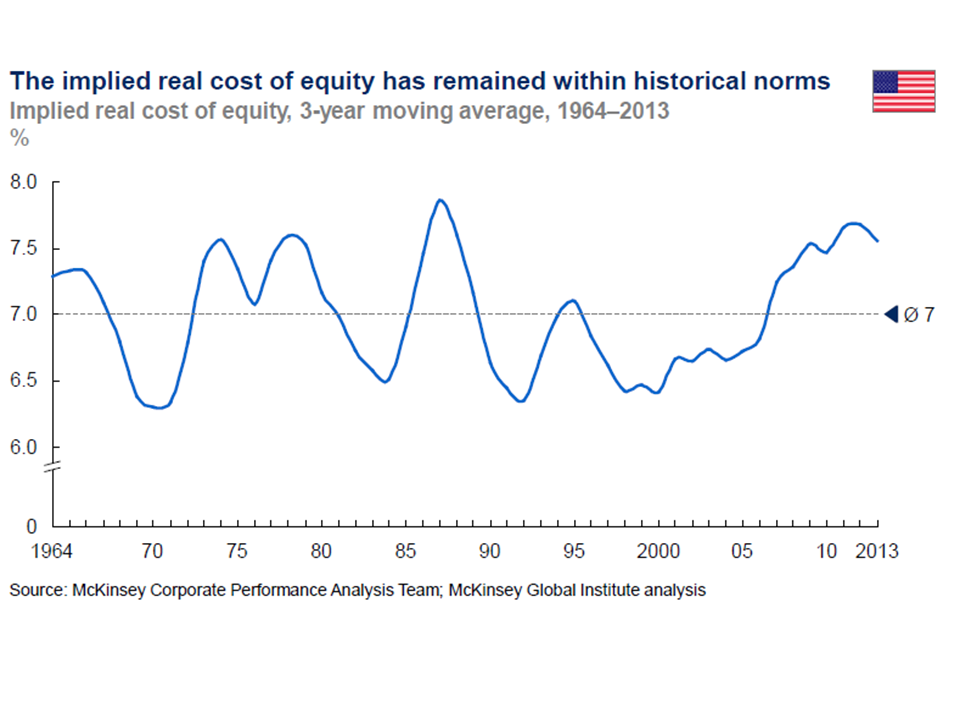
  • Little conclusive evidence that ultra-low interest rates have boosted equity markets was found.
  • At the end of 2012, house prices may have been as much as 15 percent higher in the US and the UK than they otherwise would have been without ultra-low interest rates.

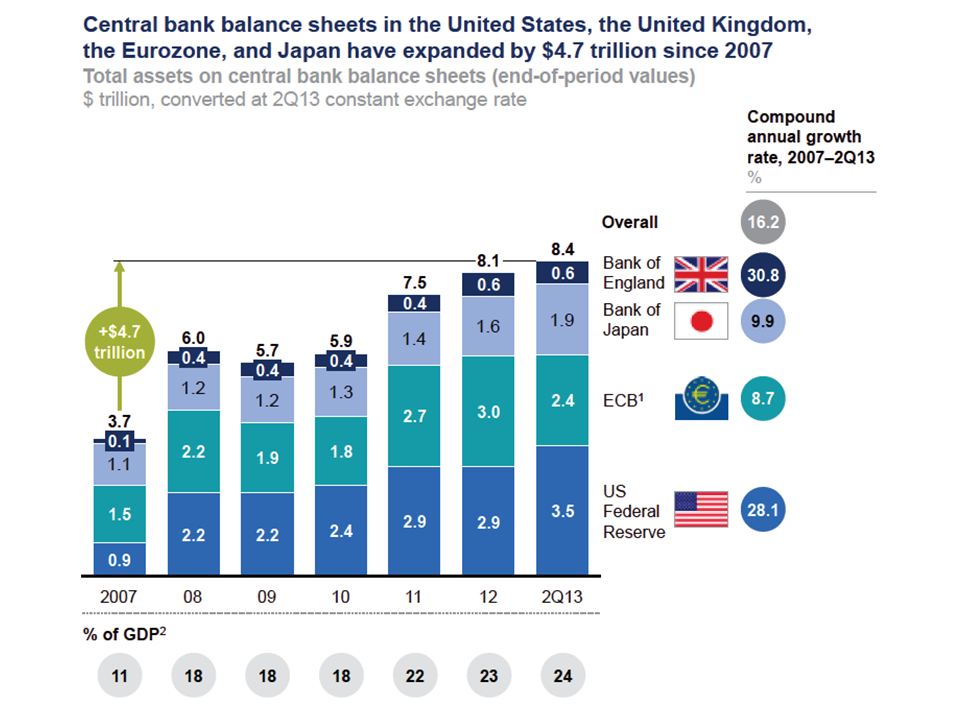
Some interesting graphs from the report are reproduced below:

click to enlargeCentral Bank Balance Sheets 2007 to Q2 2013

click to enlargeImpact of lower interest rates 2007 to 2012

 click to enlargeEffective Bank Margins 2007 to 2012

click to enlargeImplied Real Cost of Equity US 1964 to 2013

If the current low rate environment were to continue, McKinsey highlight European life insurers and banks as being under stress and believe that each will need to change their business models to survive. Defined-benefit pension schemes would be another area under continuing stress. A continuation of the search for yield for investors may lead to increased leverage (and we know how that ends!).

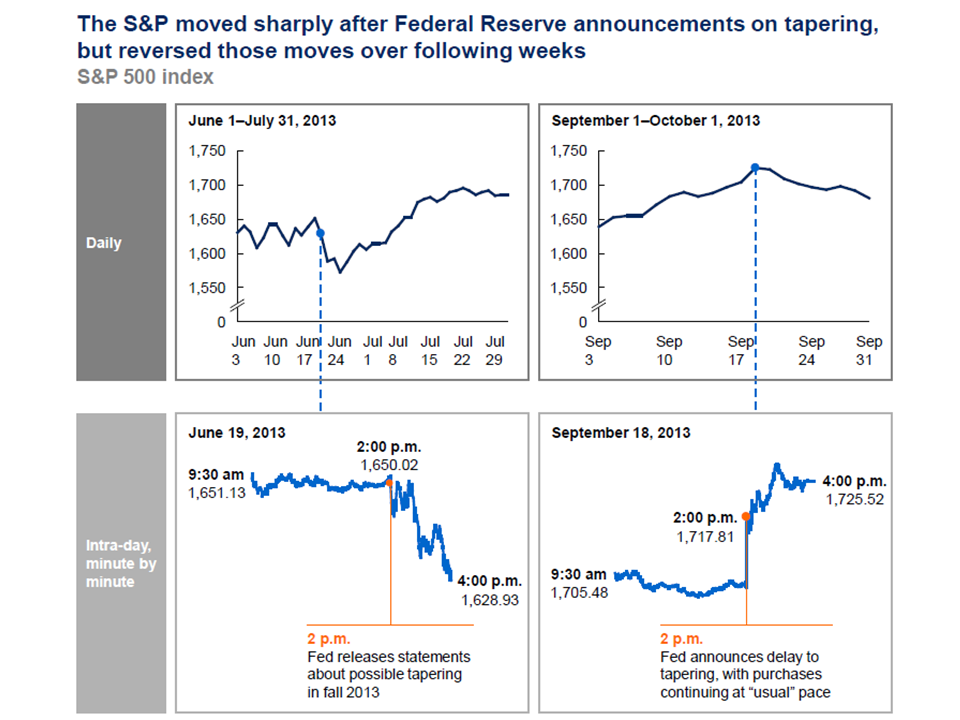
Increases in interest rate would have “important implications for different sectors in advanced economies and for the dynamics of the global capital market.” Not least, many working in investment firms and banks will never have experienced an era of increased rates in their careers to date! The first impact is likely to be an increase in volatility. Such volatility combined with market price reductions in interest sensitive assets may have an impact across the market and asset classes. McKinsey state that “a risk that volatility could prove to be a headwind for broader economic growth as households and corporations react to uncertainty by curtailing their spending on durable goods and capital investment.

click to enlargeS&P movement to tapering

The report highlight the average maturity on sovereign debt has lengthened with 5.4 years, 6.5 years, 6 years and 14.6 years for the US, Germany, Eurozone and the UK. Higher interest rates will obviously mean higher interest payments for governments. A 3% increase in US 10 year rates would mean $75 billion more in repayments or 23% higher than 2012. If, as seems likely, rates increase in the US first, the impact of capital outflows on other governments could be material, particularly in the Eurozone. A resulting Euro depreciation is highlighted (although I am not sure this would be too unwelcome currently in Europe).

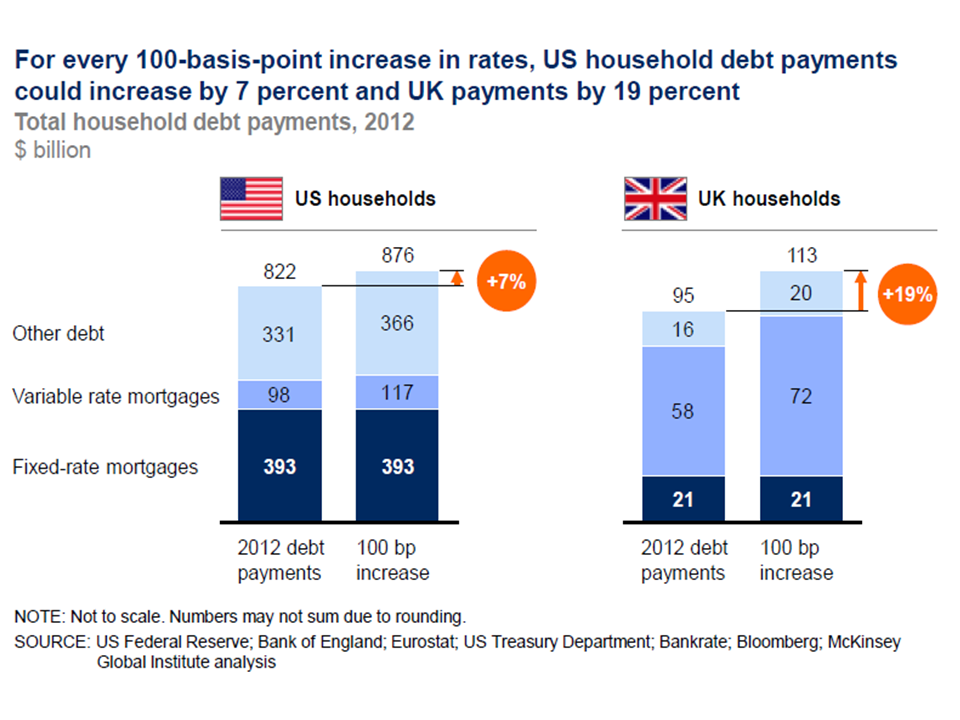
click to enlargeImpact of 1% rate increase on household income

Mark to market losses on fixed income portfolios will follow. Some, such as many non-life insurers have purposely run a short asset:liability mismatch in anticipation of rates increasing. Others such as life insurers or banks may not be in such a fortunate position. Hopefully, the impact of improved economies which is assumed to have accommodated the rise in interest rates will solve all ills.

Global Macro-Risks from IOSCO Report

The International Organization of Securities Commissions (IOSCO) released an interesting report last week, their first in an annual series, entitled “Securities Markets Risk Outlook for 2013-2014” highlighting trends, vulnerabilities and systemic risks. The four risks that the report highlighted are:

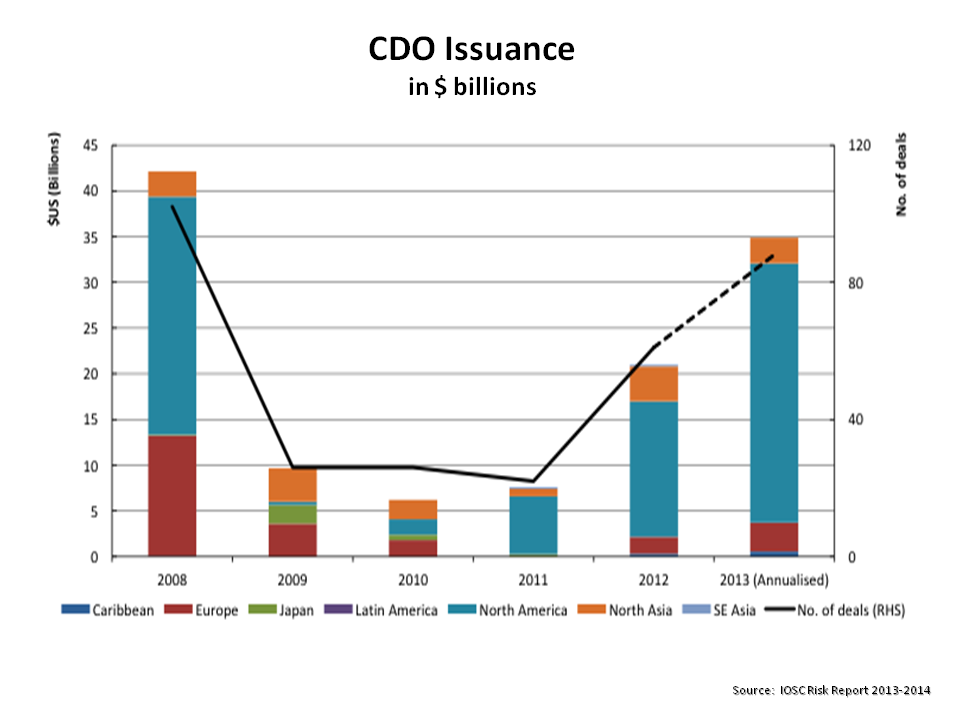
1) Low interest rates and the resulting search for yield is reawakening demand for leveraged products such as CDO´s and leveraged real estate investment funds.

2) Increased demand for high quality collateral due to higher regulatory margin requirements and central bank liquidity facilities is limiting availability of high-quality collateral and altering the balance in the system.

3) The move of OTC derivatives markets to mandatory clearing through central counterparties (CCPs) creates a challenging balancing act with a potential for systemic CCP counterparty risk.

4) Global imbalances of significant capital inflows into emerging markets after the financial crisis have been sharply reversed in recent months with the expectation that the tapering of the expansionary monetary policies in the US will begin shortly.

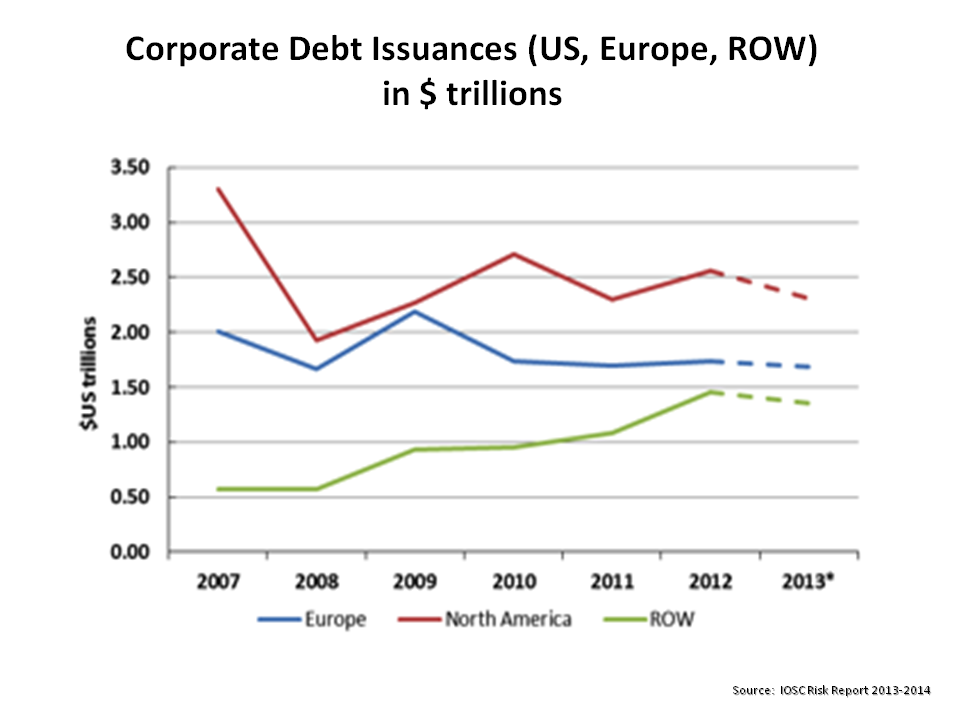
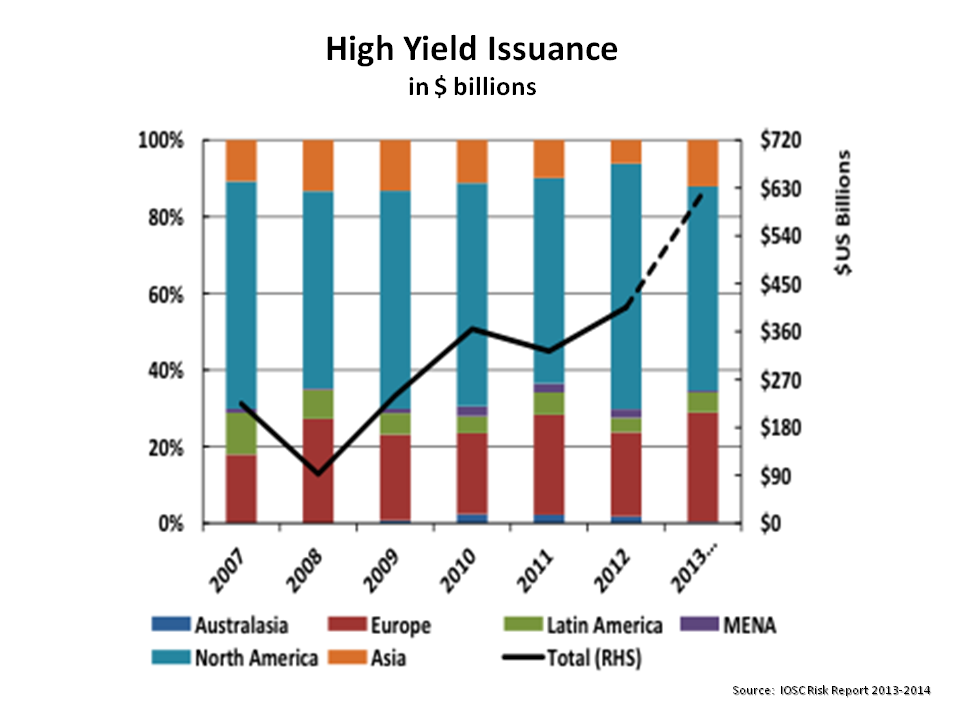
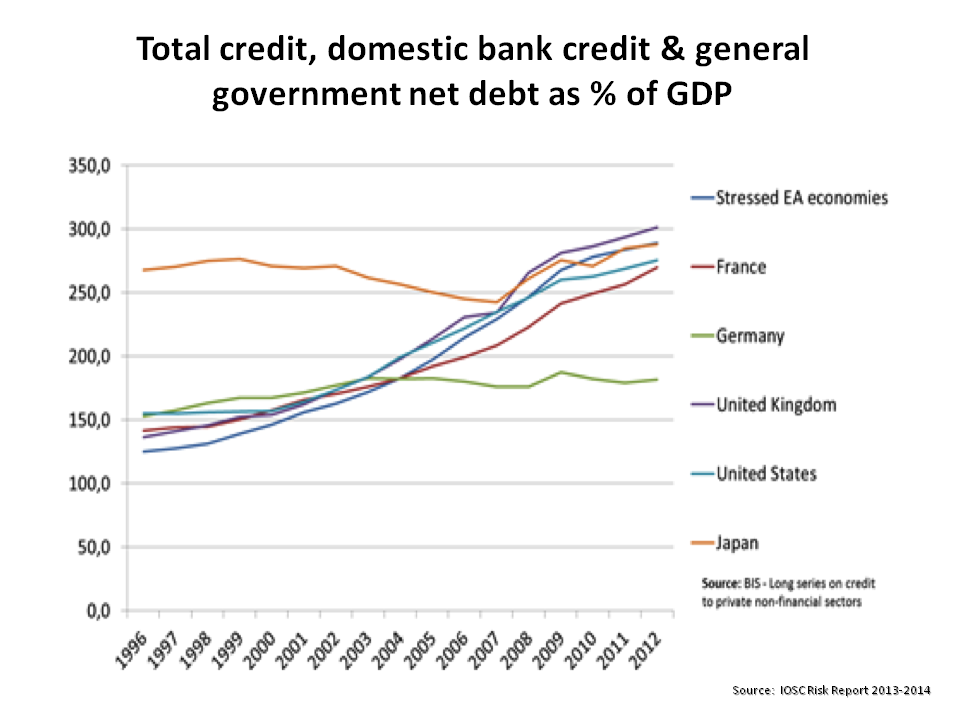
These are all interesting points, a number of which cover issues referred to in previous posts on this blog. As is likely obvious to regular readers, I am a sucker for graphs, and a number of the graphs that caught my attention from the IOSCO report are reproduced below.

click to enlargeCorporate Debt Issuance

click to enlargeHigh Yield Issuance

click to enlargeCDO Issuance

click to enlargeCredit Bank Debt Government Debt to GDP

click to enlargeRisk Premia

click to enlargeEquity Market Valuations