Category Archives: Insurance Market

ILS Pricing Party Heats Up

As we approach the July renewals, new capacity continues to pour into the insurance linked securities space pushing prices ever downward. Morgan Stanley estimate that so called alternative capital will make up 30% of the forthcoming July renewal. Market participants continue to cheer on the arrival of this capacity. To counter some of the concerns expressed about this market, some of which were outlined in my last post on this subject, I noticed an interesting article this week from Guy Carpenter’s website.

The article starts with an overview of the market stating “the impact has been dramatic; pricing has decreased more than 50 percent year over year, particularly for peak U.S. risks such as Florida”. And continues “the institutional money that is offering capacity to Florida wind at 40 percent less than last year’s pricing isn’t pricing Florida risk incorrectly, it just does not have the same capital costs and therefore can, on a sound basis, charge less for peak U.S. wind risk than the traditional reinsurance market on a sustained basis.

In other words, the return hurdles for institutional money is less! That doesn’t make sense if you consider the reduced diversification offered by investments in property catastrophe focused funds to institutional money compared to traditional reinsurers which have diversified portfolios spread over property, casualty, specialty and, in some cases, life business.

Guy Carpenter continue in their attempt to convince themselves that everything will be okay by stating that “increasing the breadth of an informed sophisticated investor base can only be a good thing for the markets’ long term prospects as it increases available capacity without leaving the market susceptible to reckless capital that will support transactions with ill-considered terms, which eventually cause problems themselves or set problematic precedents for others to follow.

I don’t really understand what they are saying here. Is it something as hollow as it’s okay to slash prices as they are “sophisticated investors”? I have even heard another broker try to justify the overall market benefit of the influx of capacity by concluding that excess capacity will result in more policyholders in the high risk zones being able to get property cover. I didn’t know that the institutional investors are getting into this asset class with the intent that the risk profiles expand! Where have we heard that before?

The article again states that “capacity is expanding because sophistication and attention to transaction mechanics is increasing, not decreasing.” Let’s look at a recent deal to see how that statement stacks up. One recent deal this month by Travelers, under the Long Point Re series, covering northeast US wind was priced as per the graphic below compared to last year.
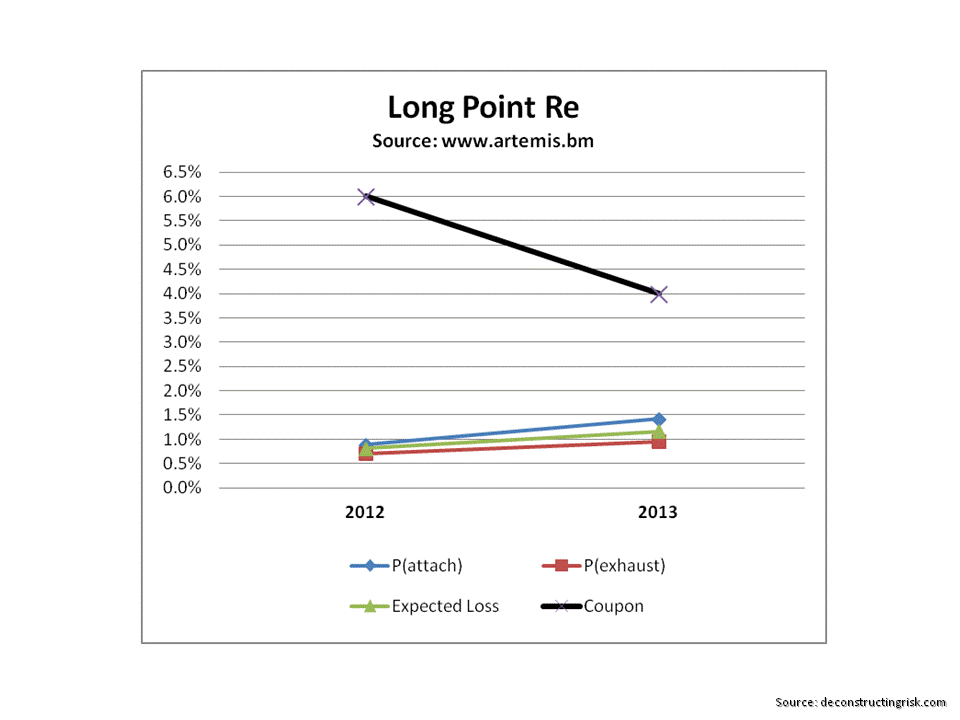
Long Point Graph

Looking at a crude measure of risk and reward, as the coupon divided by expected loss, shows a ratio reduction from 741% to 345% for 2012 to 2013. Other recent deals also show reductions in the risk/reward dynamics such as the Turkish quake deal, under the Bosphorus Re banner, which got away for 250 basis points compared to an expected loss cost of 1% (that’s a 250% ratio). Industry veteran, Luca Albertini of ILS fund Leadenhall Capital Partners, remarked that the Turkish deal was significant as previously this market did not like to play in the sub-300 basis points deal area. Albertini put a positive spin on this development for his sector by saying that the new appetite for sub-300bps issuances means that a wider range of exposures and therefore deals can be marketed, thereby providing diversification. That sounds great but, to paraphrase a quote from Jim Leitner, is there any real benefit to diversification if such diversification comes from a portfolio of underpriced assets? Underpriced risk is, after all, mispriced risk.

I recently asked a banker, who has marketed this new asset class to clients, at what level of return would the institutional investors walk away. To my surprise he said none; based upon his previous experience of investors following sheep like into quant driven new “non-correlating” asset classes, only a loss would awaken investors to the risks. It’s depressing to think that institutional money still likes to partake in the practice of picking up pennies in front of a stream roller!

As readers will realise, I am becoming ever more cautious on the wholesale insurance & reinsurance sector. With overall demand decreasing and supply increasing, the sector looks like it’s reaching an inflection point. In the short term, returns will likely remain acceptable (high single/low double digit ROE) if claim inflation stays mute resulting in continuing underwriting profits/reserve releases and in the absence of large catastrophes. In the medium term, ILS pricing pressures and new capacity entering the traditional market (latest examples include new money from Qatar in the form of Q Re and the AON/Berkshire deal providing a 7.5% blind follow line across the Lloyds market) leads me to conclude that a more defensive investment strategy in this space is warranted.
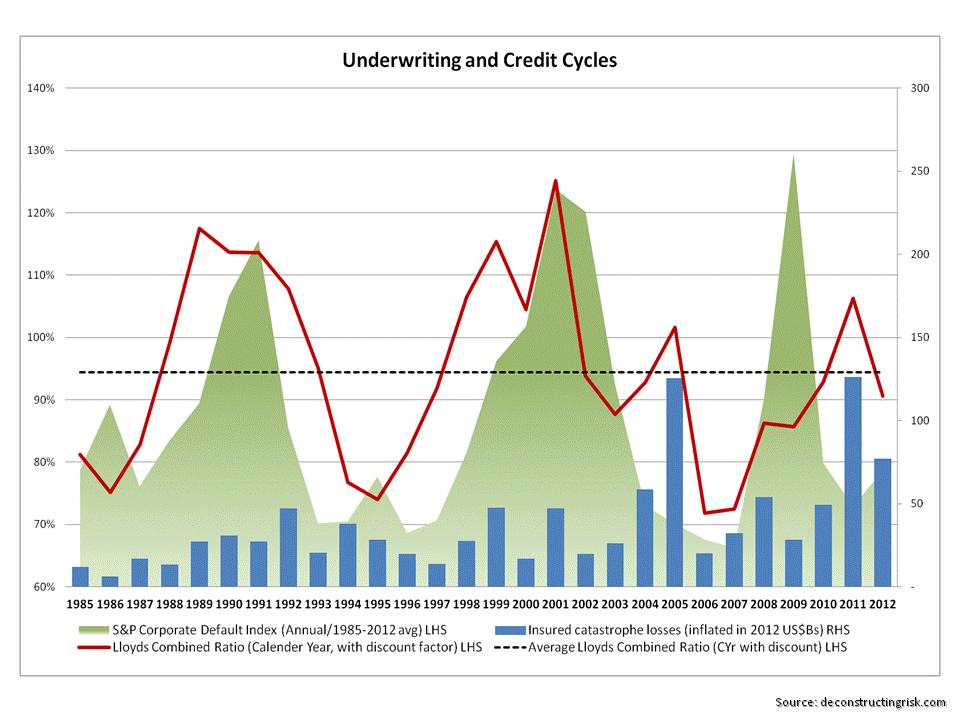
Underwriting and Credit Cycle Circles

An article from Buttonwood in March reviewed a book by Thomas Aubrey – “Profiting from monetary policy – investing through the business cycle”. Aubrey argues that credit cycles are better predictors of equity and asset prices rather than economic growth. Differentials between the cost of capital and the return on capital drive capital supply.

In previous presentations on the insurance sector and the factors affecting underwriting cycles, I have used the credit cycle as an explanation for demand and supply imbalances. Given the current influx of yield seeking capital into the wholesale insurance market, by way of new risk transfer mechanisms in the ILS sector, and the irrational cost of capital driven by loose monetary policy around the world, Aubrey’s arguments make sense.

Using the calendar year combined ratios of the Lloyds of London insurance market as a proxy for the wholesale market, discounting such ratios at the risk free rate for each year with an assumed payout duration, and comparing these to an index of S&P defaults by origination year illustrates the relationship.

Underwriting & Credit CyclesThe more recent impact of natural catastrophes from 2005 and 2011 illustrates the higher concentration of shorter tail business lines in the past decade as interest rate reductions make longer tail lines less attractive.

Of course, no one factor drives the insurance cycle and there may be a degree of circularity in this picture. Many of the losses at Lloyds in the 1980s and 1990s came from asbestos and pollution claims, issues which drove many companies into insolvency. There is also a circularity between the insurance losses from the events of 9/11 and the economic impact following the bursting of the internet bubble. In addition, there are limitations in comparing calendar year ratios which includes reserve deterioration (particularly from asbestos years) against defaults by origination. Notwithstanding these items, it’s an interesting graph!

Does financial innovation always end in reduced risk premia?

Quarterly reports from Willis Re and Aon Benfield highlight the impact on US catastrophe pricing from the new capital flowing into the insurance sector through insurance linked securities (ILS) and collaterised covers. Aon Benfield stated that “clients renewing significant capacity in the ILS market saw their risk adjusted pricing decrease by 25 to 70 percent for peak U.S. hurricane and earthquake exposed transactions” and that “if the financial management of severe catastrophe outcomes can be attained at multiple year terms well inside the cost of equity capital, then at the extreme, primary property growth in active zones could resume for companies previously restricting supply”.

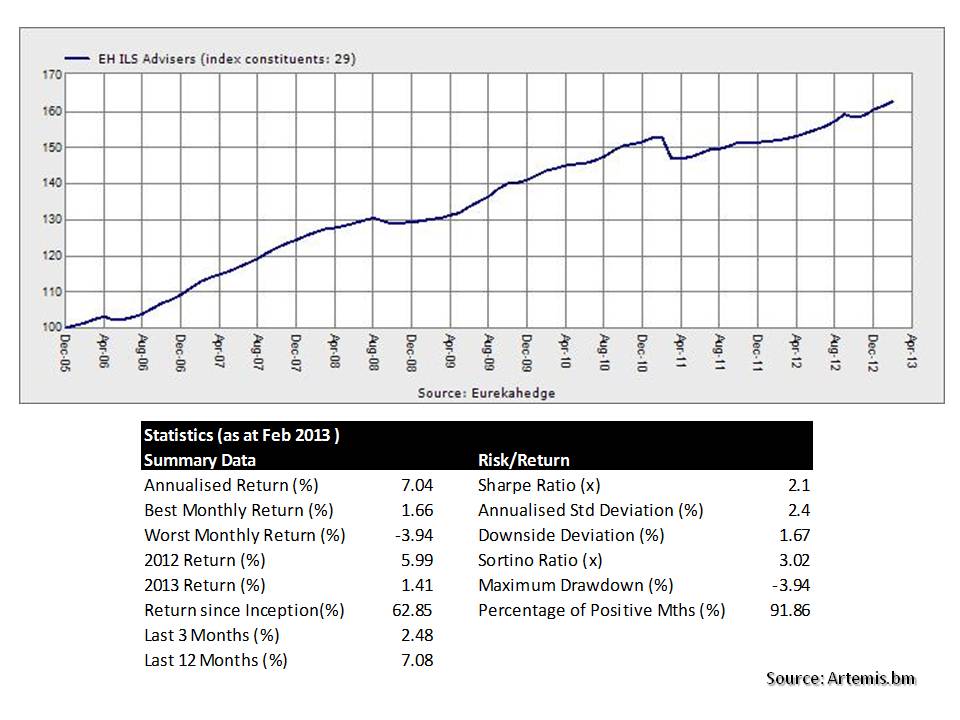
This represents a worrying shift in the sector. Previously, ILS capacity was provided at rates at least equal to and often higher than that offered by the traditional market. The rationale for a higher price made sense as the cover provided was fully collaterized and offered insurers large slices of non-concentrated capacity on higher layers in their reinsurance programmes. The source of the shift is significant new capacity being provided by yield seeking investors lured in by uncorrelated returns. The Economist’s Buttonwood had an article recently entitled “Desperately seeking yield” highlighting that spreads on US investment grade corporate bonds have halved in the past 5 years to about 300bps currently. Buttonwood’s article included Bill Gross’s comment that “corporate credit and high-yield bonds are somewhat exuberantly and irrationally priced”. As a result, money managers are searching for asset classes with higher yields and, by magic, ILS offers a non-correlating asset class with superior yield.  Returns as per those from Eurekahedge on the artemis.bm website in the exhibit below highlight the attraction.

ILS Returns EurekahedgeSuch returns have been achieved on a limited capacity base with rationale CAT risk pricing. The influx of new capital means a larger base, now estimated at $35 billion of capacity up from approximately $5 billion in 2005, which is contributing to the downward risk pricing pressures under way. The impact is particularly been felt in US CAT risks as these are the exposures offering the highest rate on lines (ROL) globally and essential risks for any new ILS fund to own if returns in excess of 500 bps are to be achieved. The short term beneficiaries of the new capacity are firms like Citizens and Allstate who are getting collaterised cover at a reduced risk premium.

The irony in this situation is that these same money managers have in recent years shunned traditional wholesale insurers, including professional CAT focussed firms such as Montpelier Re, which traded at or below tangible book value. The increase in ILS capacity and the resulting reduction of risk premia will have a destabilising impact upon the risk diversification and therefore the risk profile of traditional insurers. Money managers, particularly pension funds, may have to pay for this new higher yielding uncorrelated asset class by taking a hit on their insurance equities down the road!

Financial innovation, yet again, may not result in an increase in the size of the pie, as originally envisaged, but rather mean more people chasing a smaller “mispriced” pie. Sound familiar? When thinking of the vast under-pricing of risk that the theoretical maths driven securitisation innovations led to in the mortgage market, the wise words of the Buffet come to mind – “If you have bad mortgages….they do not become better by repackaging them”. Hopefully the insurance sector will avoid those mistakes!

Relative valuations of selected reinsurers and wholesale insurers

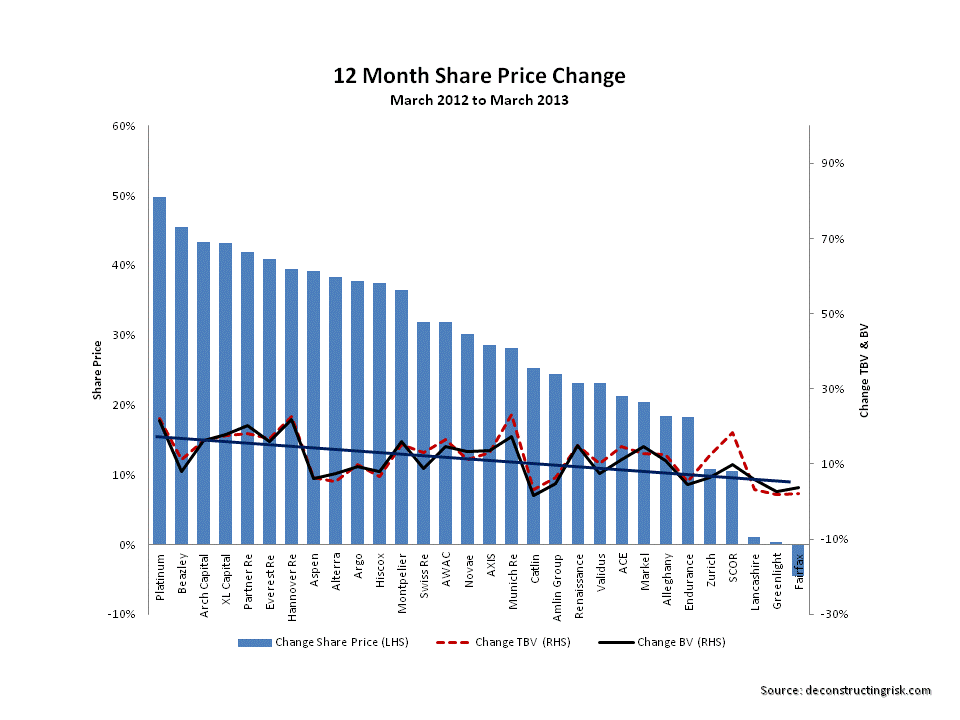
It’s been a great 12 months for wholesale insurers with most seeing their share price rise by 20%+, some over 40%. As would be expected, there has been some correlation between the rise in book values and the share price increase although market sentiment to the sector and the overall market rally have undoubtedly also played their parts. The graph below shows the movements over the past 12 months (click to enlarge).

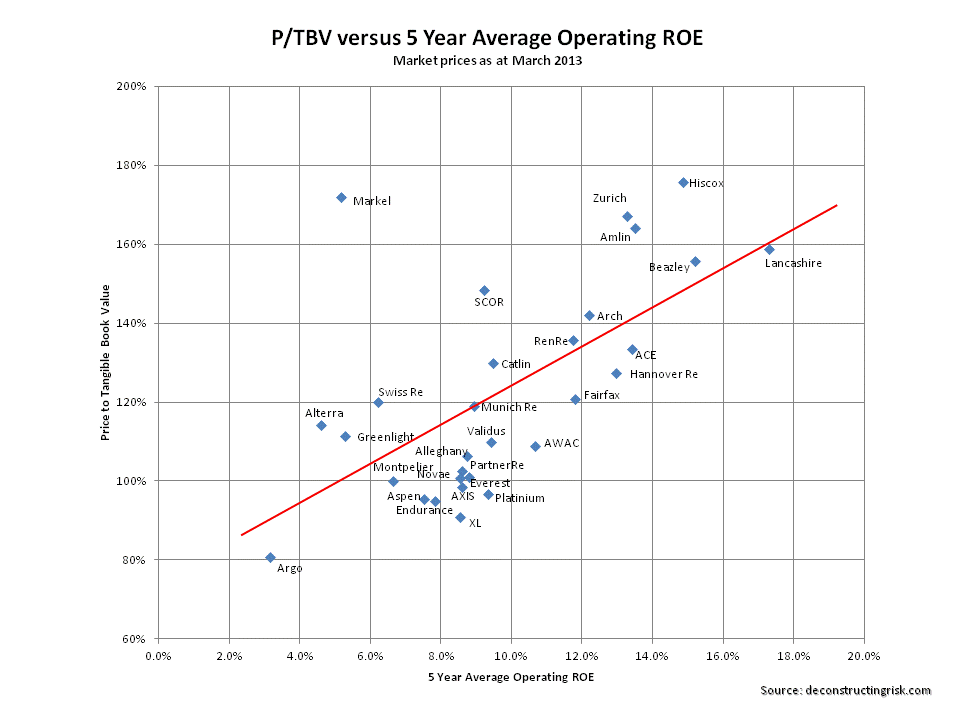
12 month share price change selected reinsurers March 2013The price to tangible book is one of my preferred indicators of value although it has limitations when comparing companies reporting under differing accounting standards & currencies and trading in different exchanges. The P/TBV valuations as at last weekend are depicted in the graph below. The comments in this post are purely made on the basis of the P/TBV metric calculated from published data and readers are encouraged to dig deeper.

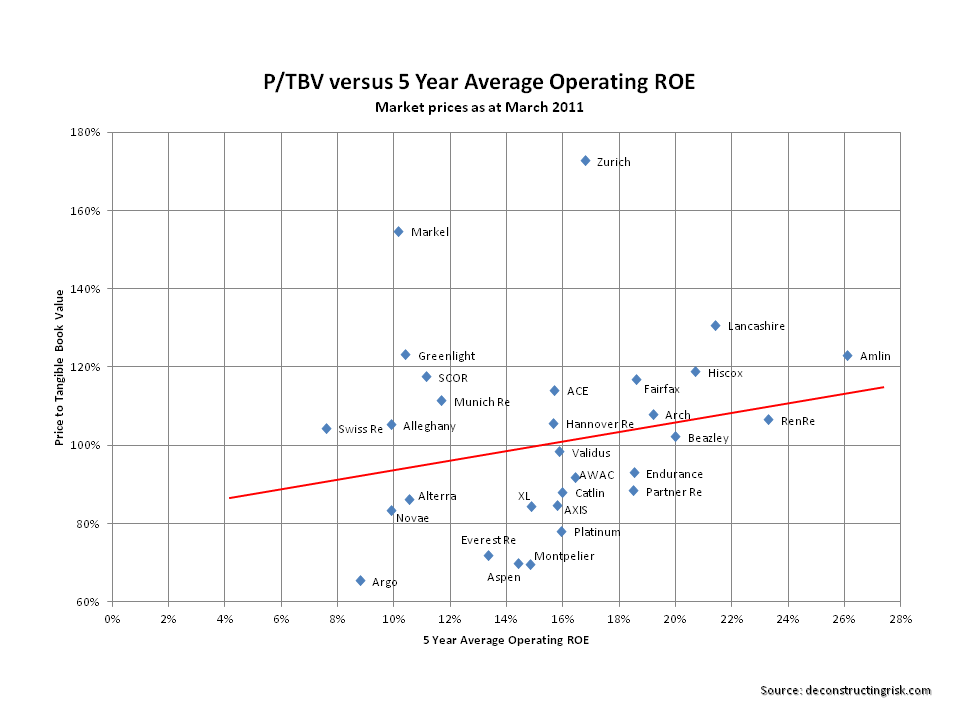
I tend to look at the companies relative to each other in 4 broad buckets – the London market firms, the continental European composite reinsurers, the US/Bermuda firms, and the alternative asset or “wannabe buffet” firms.  Comparisons across buckets can be made but adjustments need to be made for factors such as those outlined in the previous paragraph. Some firms such as Lancashire actually report in US$ as that is where the majority of their business is but trade in London with sterling shares. I also like to look at the relative historical movements over time & the other graph below from March 2011 helps in that regard.

Valuations as at March 2013 (click to enlarge):

Price to net tangible book & 5 year average ROE reinsurers March 2013

Valuations as at March 2011 (click to enlarge):

Price to net tangible book & 5 year average ROE reinsurers March 2011 The London market historically trades at the highest multiples – Hiscox, Amlin, & Lancashire are amongst the leaders, with Catlin been the poor cousin. Catlin’s 2012 operating results were not as strong as the others but the discount it currently trades at may be a tad unfair. In the interest of open disclosure, I must admit to having a soft spot for Lancashire. Their consistent shareholder friendly actions result in the high historical valuation. These actions and a clear communication of their straight forward business strategy shouldn’t distract investors from their high risk profile. The cheeky way they present their occurrence PMLs in public disclosures cannot hide their high CAT exposures when the occurrence PMLs are compared to their peers on a % of tangible asset basis. Their current position relative to Hiscox and Amlin may be reflective of this (although they tend to go down when ex dividend, usually a special dividend!).

Within the continental European composite reinsurer bucket, the Munich and Swiss, amongst others, classify chunky amounts of present value of future profits from their life business as an intangible. As this item will be treated as capital under Solvency II, further metrics need to be considered when looking at these composite reinsurers. The love of the continental Europeans of hybrid capital and the ability to compare the characteristics of the varying instruments is another factor that will become clearer in a Solvency II world. Compared to 2011 valuations Swiss Re has been a clear winner. It is arguable that the Munich deserves a premium given it’s position in the sector.

The striking thing about the current valuations of the US/Bermudian bucket is how concentrated they are, particularly when compared to 2011. The market seems to be making little distinction between the large reinsurers like Everest and the likes of Platinum & Montpelier. That is surely a failure of these companies to distinguish themselves and effectively communicate their differing business models & risk profiles.

The last bucket is the most eccentric. I would class firms such as Fairfax  in this bucket. Although each firm has its own twist, generally these companies are interested in the insurance business as the provider of cheap “float”, a la Mr Buffet, with the focus going into the asset side. Generally, their operating results are poorer than their peers and they have a liking for the longer tail business if the smell of the float is attractive enough (which is difficult with today’s interest rate). This bucket really needs to be viewed through different metrics which we’ll leave for another day.

Overall then, the current valuations reflect an improved sentiment on the sector. Notwithstanding the musings above, nothing earth shattering stands out based solely on a P/TBV analysis.  The ridiculously low valuations of the past 36 months aren’t there anymore. My enthusiasm for the sector is tempered by the macro-economic headwinds, the overall run-up in the market (a pull-back smells inevitable), and the unknown impact upon the sector of the current supply distortions from yield seeking capital market players entering the market.

Historical Price to Tangible Book Value for Reinsurers and Wholesale Insurers

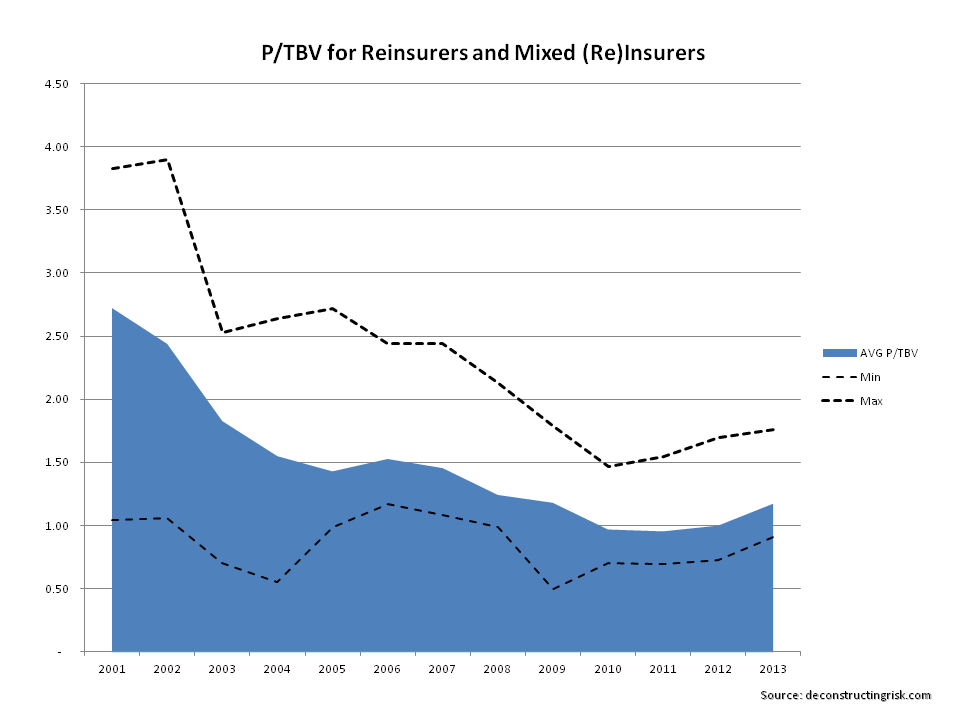
Following on from the previous post, the graph below shows the historical P/TBV ratios for selected reinsurers and wholesale insurers with a portfolio including material books of reinsurance (company names as per previous post). The trend shows the recent uptick in valuations highlighted in the previous post. The graph is also consistent with the Guy Carpenter price to book value graph widely used in industry presentations.

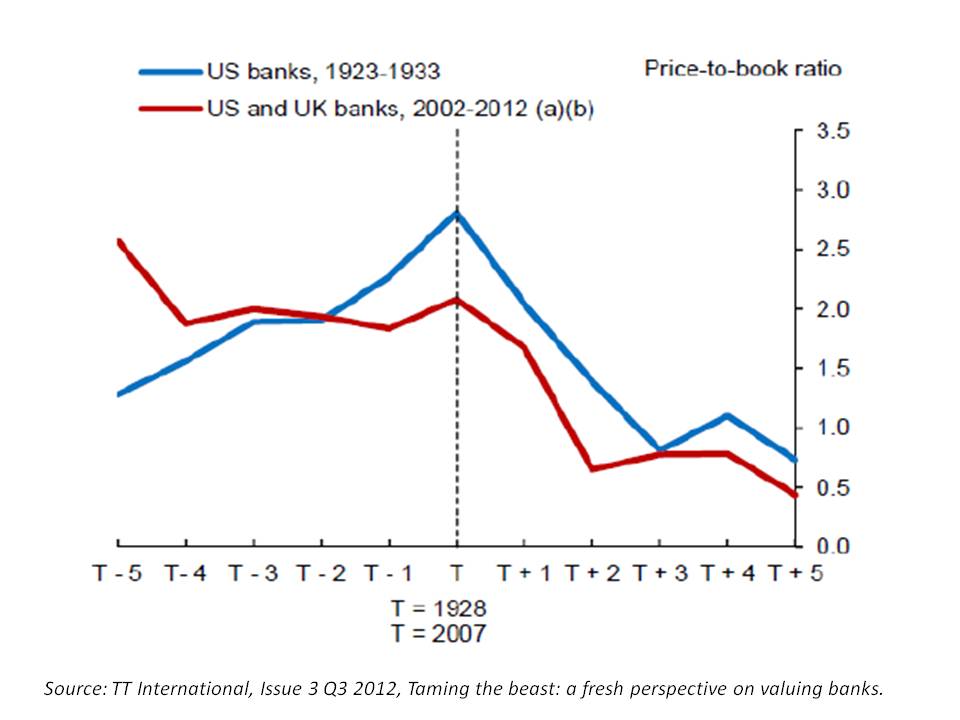
Historical P to TBV Reinsurers & Wholesale Insurers 2001 to 2013Over the past 12 months the sector has broken out of the downward trend across the financial services sector following the financial crisis, most notably in the banking sector as the graph below from TT International illustrates.

TT International Bank Price to Book Ratio

Tangible book value growth across the wholesale insurance sector was approximately 10% from YE2011 to YE2012 and the weighted average operating ROE of 11% in 2012 has been rewarded with higher multiples.

The sector faces a number of significant issues and a return to valuations prior to the financial crisis remains unrealistic. An increase in capacity from non-traditional sources and the increased loss costs from catastrophes are cited in industry outlooks as headwinds although I tend to agree with EIOPA’s recently published risk dashboard in highlighting the impact of macro-economic risks on insurer’s balance sheets as the major headwind.

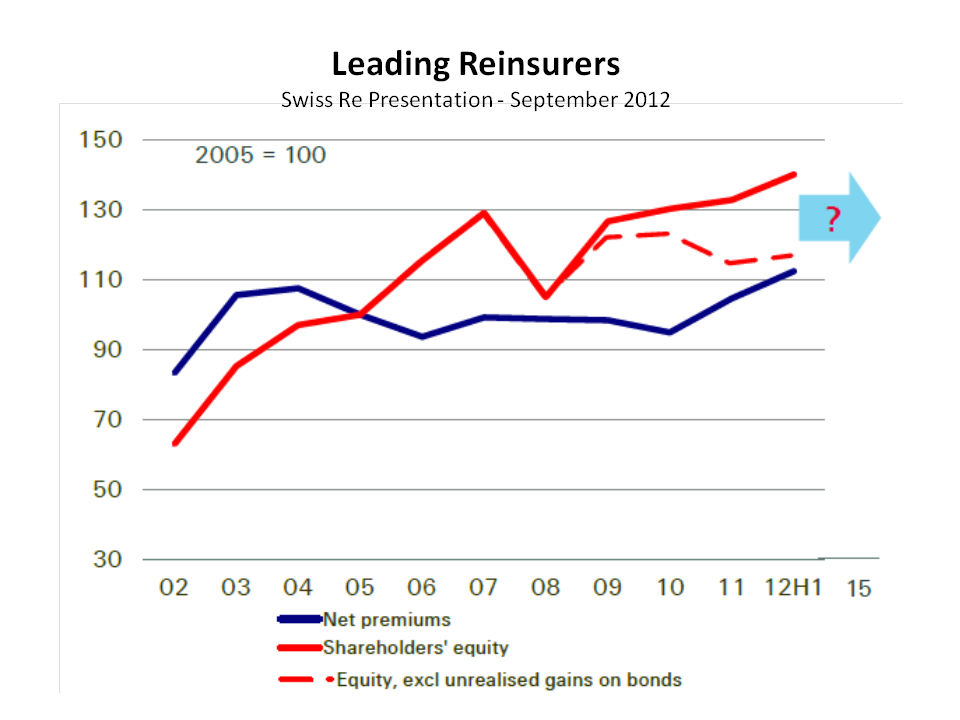
One issue that deserves further attention in this regard is the impact low interest rates have had on boasting unrealised gains and the resulting impact on the growth in book values. Swiss Re is one of the few companies to explicitly highlight the role of unrealised gains in its annual report, making up approximately 13% of its equity. In a presentation in September 2012, the company had an interesting slide on the impact of unrealised gains on the sector’s capital levels, reproduced below.

Reinsurer Capital & Unrealised Gains

P/TBV is one of my favoured metrics for looking at insurance valuations. But no one metric should be looked at in isolation. The impact of any sudden unwinding of unrealised gains if the macro environment turns nasty is just one of the issues facing the sector which deserves a deeper analysis.