Category Archives: Equity Market

Siegel versus Shiller on CAPE

Following on from last week’s post citing the Shilling PE ratio, also called the cyclically adjusted price earnings ratio or CAPE, there was an interesting article in today’s FT referring to Jeremy Siegel’s previous critique of Robert Shiller’s bearish CAPE.

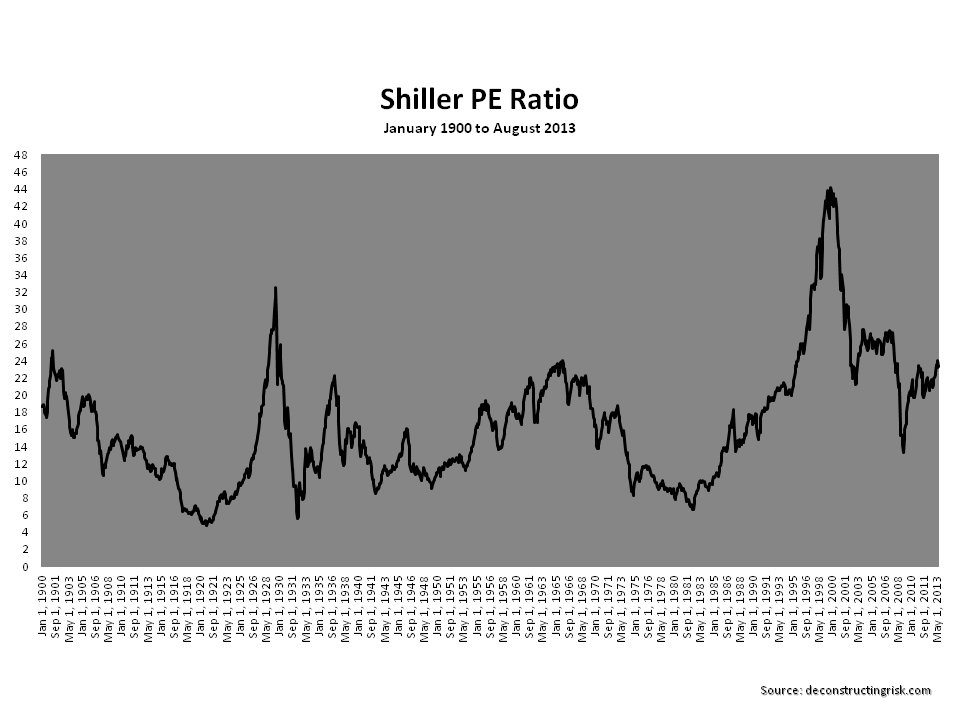
Siegel points to the current S&P500 level at a 15 to 16 times 2013 estimated earnings as being close to its historical average suggesting the CAPE is overtly negative. Siegel points out that the CAPE has been bearishly above its long term average for the past 22 years, except for a brief 9 month spell.

Siegel believes that the underlying earnings in the calculation need to be adjusted for accounting changes in the 1990s that required downward only adjustment to book values when asset prices are depressed without a rebalancing upwards when asset prices are rising. According to Siegel, using more appropriate National Income and Product (NIPA) profit data in the CAPE calculation results in a much more bullish CAPE indicator.

Another issue with the underlying data is the increase in profit margins over the past 15 years due to varying (and generally lower) global corporate tax rates, the rise of technology firms with fatter margins, and generally stronger corporate balance sheets.

Finally, Siegel points to the macroeconomic environment whereby periods of low interest and inflation rates justify higher PE ratios.

The FT article points to research by the London Business School that indicate the CAPE based upon data available at the time (“out of sample date”) is a poor historical indicator for timing entries and exits in the market. The research concludes there is no consistent relationship between forecasts and outcomes.

This research and Siegel’s criticism make valid points. Historical data does need to be viewed in the context of the reporting standards of the time. However, I would be sceptical about arguments about higher long term margins and that the current macro environment justifies higher multiples (as highlighted in a previous post). The fact is that we are in unchartered territory in terms of massive Central Bank market intervention and the macro environment across the globe presents considerable challenges in getting back to a normalised situation.

The fact that Shiller’s CAPE has been bearish for so long may make the case for some adjustment. The difficulty is that once we start making adjustments to fit the current situation the validity of the underlying metric is compromised. It is too simplistic to look at a single measure to justify investment decisions. Equally ignoring one measure over another when they indicate contrary views is naïve. Overall, I am more in the Shiller camp than the Siegel camp. Notwithstanding my expectation that we are due some Autumn volatility, I would purchase quality stocks on the dip if their valuation justified it. But the macroeconomic environment scares me so I am conscious of Andres Drobny’s advise that following the financial crisis one should always “change your views as facts change“. The difficulty, of course, is knowing when the facts are changing before its too obvious (and in all likelihood too late)!
September bear party?

With stock valuations high and the market chatter nervously fixated on the great tapering debate, the bears claimed victory today with the S&P off 1.6% and the Dow down 170 points.

The impact of Central Bank liquidity has undeniably resulted in lofty stock valuations given the economic backdrop, as the graph of the historical Shiller PE ratio below illustrates.

Click to enlargeShiller PE S&P500 August 2013

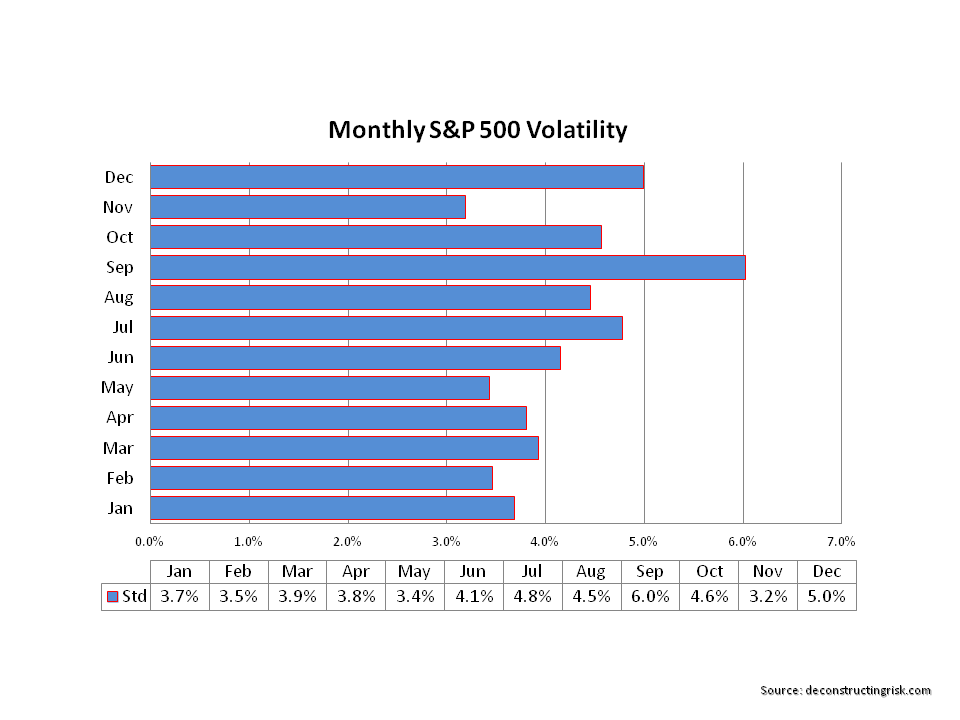
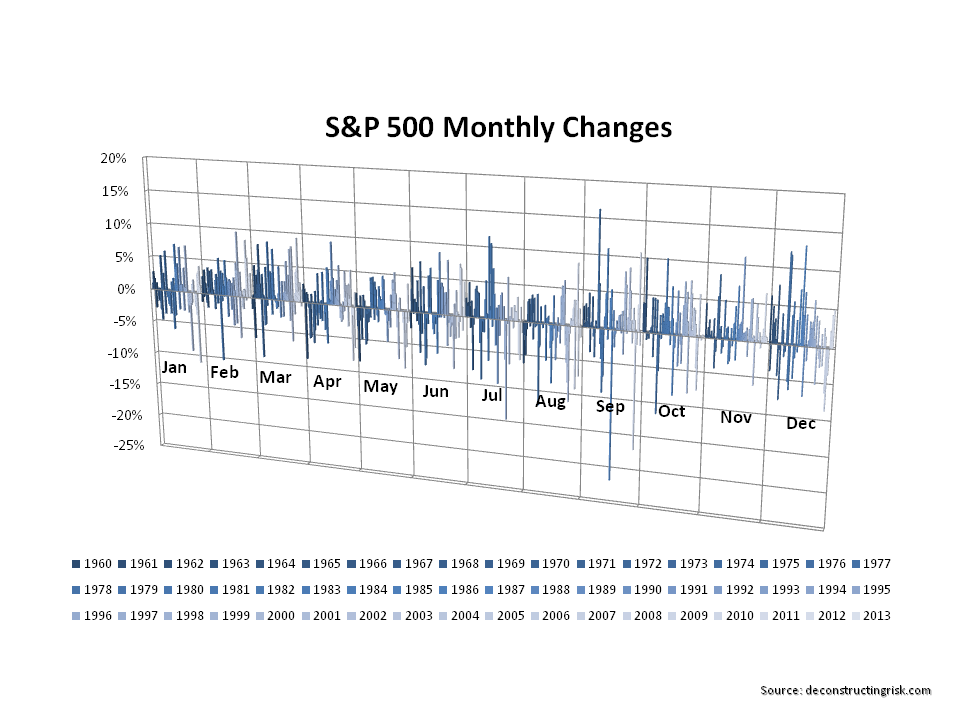
September is commonly viewed as the month when investors and traders, upon their return from sunning themselves, get nervous about year end results (read bonuses) and start to take money off the table. The statistics back this up as the graphs below on historical S&P 500 monthly returns illustrates.

Click to enlargeS&P500 Monthly ChangesS&P500 Monthly Volatility

So, today looks to me like the possible opening salvo for a September bear party.  I wouldn’t get too worried though, despite the musings from Jackson Hole there is always a Central Bank around to scare the naughty bears away if they overstay their welcome.

New valuation realities

As the market pulls back again this week in a much-needed dose of worry about where QE is leading us and how it will end, there is another interesting article from Buttonwood in this week’s Economist. Based upon work of analysts in investment banks BNP Paribas, Société Générale, and Goldman Sachs (Andrew Lapthorne of SG does high quality analysis and his work generally makes for insightful reading), the article highlights how valuations based upon price to book ratios have broken with pre-crisis history and currently differentiate more acutely between “quality” stocks (depending upon varying criteria as applied by the said analysts).

The article highlights the limited pool of “quality” stocks no-matter what criteria is used and Buttonwood also makes a point (which I fully agree with), namely that “investors have been flocking to equities because interest rates are so low; some, perhaps, on the naive view that using a lower discount rate on future cashflows translates into higher share prices today“.

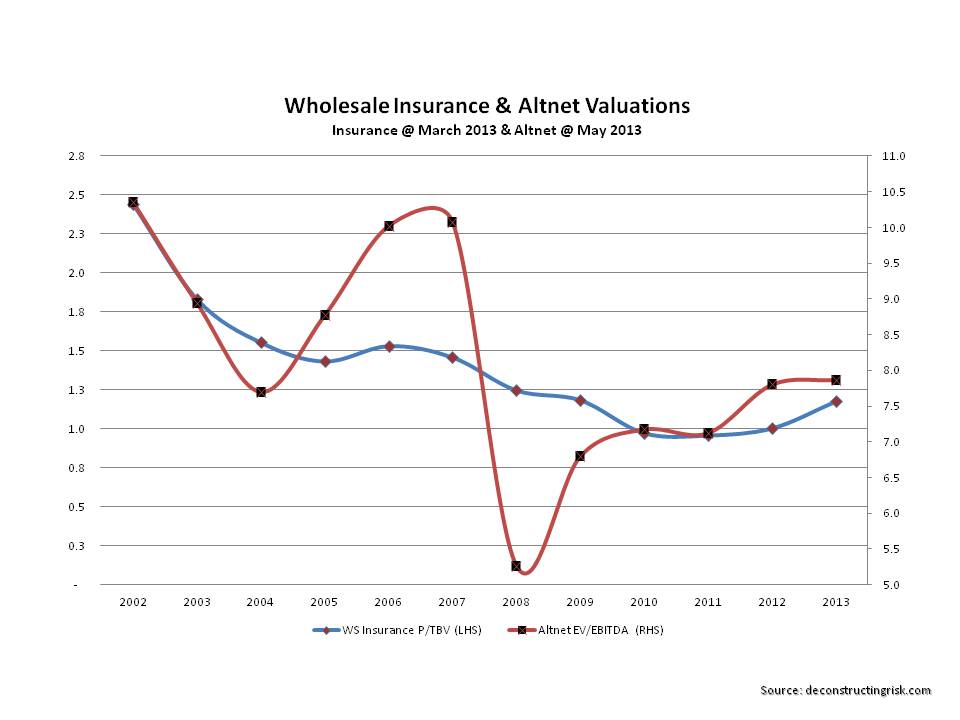
As readers of this blog will be aware, two sectors that I follow are the wholesale insurance and the alternative telecom sectors. In previous posts, I have presented my historical valuation metrics for both sectors (albeit from limited samples) and they are combined in the graph below (one based upon price to tangible book, the other an EV/ebitda metric). The alternative telecom sector is as far away from any “quality” stock criteria that one could imagine and would be in the lowest quintile (on volatility alone!) of any sensible criteria. Although results are volatile by definition in the wholesale insurance sector, some of the bigger names like Munich Re may get higher ratings, maybe a 2 or 3 on Buttonwood’s graph.

click to enlarge

wholesale insurer & altnet valuation metric comparison

The main point I am trying to make in this post is that relying on valuations returning to levels prior to the financial crisis for certain sectors is just not realistic or sensible. Unless the market goes into fantasy land on the upside (this may seem idle speculation given the market’s current mood but just think where sentiment was a few short weeks ago), the differentiation currently been made in the market between business models and their inherent volatility is rational. The worry, as the article points out, is that there is not enough “quality” stocks around currently to wet the appetite of hungry investors and historically that has been a negative indicator for future stock returns.

Are equity markets in bubble territory?

With Friday’s selloff, it will be interesting to see if this week brings a pause to the equity run-up. The rise has been dramatic with most US indices up 12% to 14% this year and over 20% since the November lows. I was struck by the last market pause in May and the comments on the US business TV shows. One said that there was a wall of money on the sidelines waiting to buy on the dip. Institutional money desperate for yield and company’s filling buy back programmes do seem to provide this market with a floor.

Historical multiples such as the TTM PE and the PE 10 at 18.85 and 23.89 at the end of May for the Dow are high relative to the historical averages of 15.5 and 16.47 respectively. However given the flood of money printing at Central Banks around the world such levels are not surprising nor excessive. I don’t think we are in bubble territory yet but, given the lack of alternatives for money, we will likely end up there. Whether that takes another 6 or 12 or 24 months is not really important. In cases where risk premia is irrational, a quote from Jim Leitner in “The Invisible Hands” comes to mind where he advises that an investor should focus on “the possibility of buying cheap insurance when the market is willing to sell it, before the horse has left the barn“. It seems to me as this is such a time and I will be looking for such opportunities in the absence of a major pull back. In my mind, its better to spend some profit to give peace of mind whilst also participating in further run-ups.

Longer term, I am disturbed by the macro policies currently been pursued and the impact that an exit from QE may have. It makes little sense to respond to every crisis with loose monetary policy designed to reinflate asset values so that Western consumers can get back to the Mall. I thought our response was going to be more fundamental this time! On that subject, I noticed a review of a book in the Sundays – its called “When the money runs out, the end of western influence” by the HSBC economist Stephen King. The review was just okay although the Economist seems to have given it a better one. Cheery reading for the holidays!