Category Archives: Equity Market

Farewell, dissonant 2016.

Many things will be written about the events of 2016.

The populist victories in the US election and the UK Brexit vote will no doubt have some of the biggest impacts amongst the developed world. Dissatisfaction amongst the middle class across the developed world at their declining fortunes and prospects, aligned with the usual disparate minorities of malcontent, has forced a radical shift in support away from the perceived wisdom of the elite on issues such as globalisation. The strength of the political and institutional systems in the US and the UK will surely adapt to the 2016 rebuff over time.

The more fundamental worry for 2017 is that the European institutions are not strong enough to withstand any populist curveball, particularly the Euro. With 2017 European elections due in France, Germany, Netherlands and maybe in Italy, the possibility of further populist upset remains, albeit unlikely (isn’t that what we said about Trump or Brexit 12 months ago!).

The 5% rise in the S&P 500 since Trump’s election, accounting for approx half of the overall increase in 2016, has made the market even more expensive with the S&P 500 currently over 60% of its historical average based upon the 12 month trailing PE and the Shiller CAPE (cyclically adjusted price to earnings ratio, also referred to as the PE10). A recent paper by Valentin Dimitrov and Prem C. Jain argues that stocks outperform 10-year U.S. Treasuries regardless of CAPE except when CAPE is very high (the current CAPE is just above the “very high” reference point of 27.6 in the paper) and that a high CAPE is an indicator of future stock market volatility. Bears argue that the President elect’s tax and expansionary fiscal policies will likely lead to higher interest rates and inflation in 2017 which will further strengthen the dollar, both of which will pressure corporate earnings.

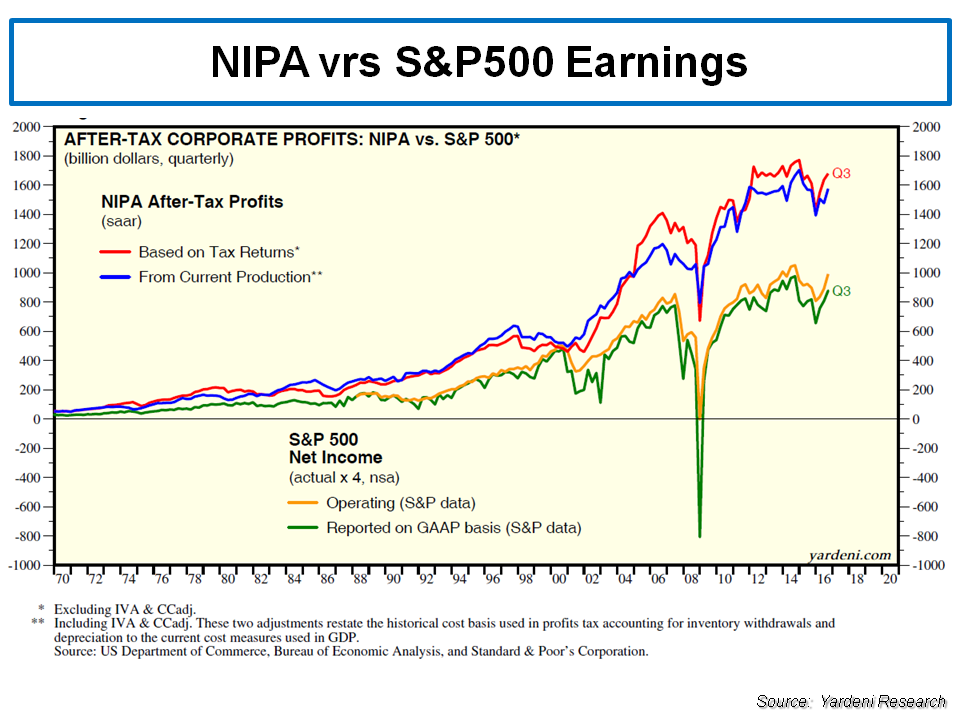
Critics of historical PE measures like CAPE, such as Jeremy Siegel in this paper (previous posts on this topic are here and here), highlight the failings of using GAAP earnings and point to alternative metrics such as NIPA (national income and product account) after-tax corporate profits which indicate current valuations are more reasonable, albeit still elevated above the long term average by 20%-30%. The graph below from a Yardeni report illustrates the difference in the earnings metrics.

click to enlargenipa-vrs-sp500-earnings
Bulls further point to strong earnings growth in 2017 complemented by economic stimulus and corporate tax giveaways under President Trump. Goldman Sachs expects corporations to repatriate approx $200 billion of overseas cash and to spend a lot of it buying back stock rather than making capital expenditures (see graph below) although the political pressure to invest in the US may impact the balance.

click to enlargesp500-use-of-cash-2000-to-2017
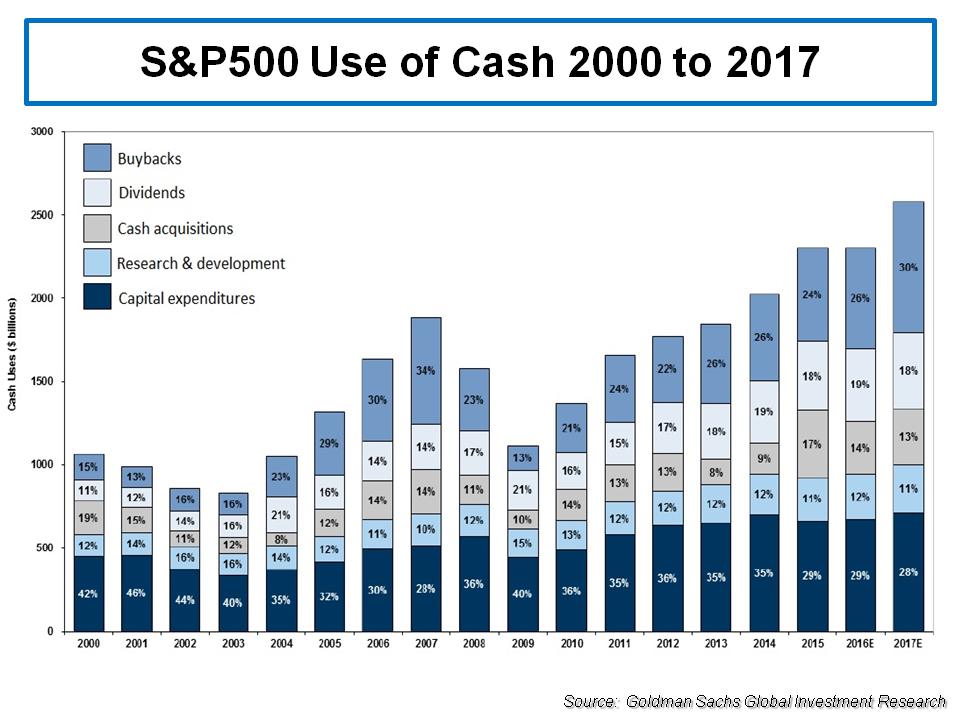
The consensus amongst analysts predict EPS growth in 2017 in the high single digits, with many highlighting further upside depending upon the extent of the corporate tax cuts that Trump can get past the Republican congress. Bulls argue that the resulting forward PE ratio for the S&P 500 of approx 17 only represents a 20% premium to the longer term average. Predictions for the S&P 500 for 2017 by a selection of analysts can be seen below (the prize for best 2016 prediction goes to Deutsche Bank and UBS). It is interesting that the average prediction is for a 4% rise in the S&P500 by YE 2017, hardly a stellar year given their EPS growth projections!

click to enlargesp500-predictions-2017
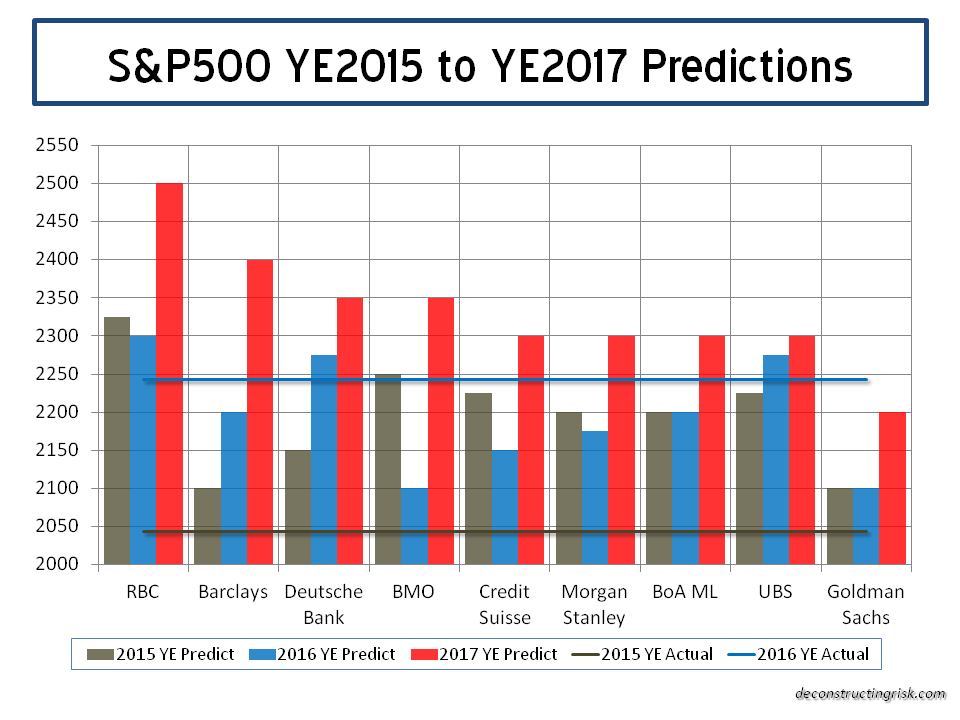
My best guess is that the market optimism resulting from Trump’s victory continues into 2017 until such time as the realities of governing and the limitations of Trump’s brusque approach becomes apparent. Volatility is likely to be ever present and actual earnings growth will be key to the market story in 2017 and maintaining high valuation multiples. After all, a low or high PE ratio doesn’t mean much if the earnings outlook weakens; they simply indicate how far the market could fall!

Absent any significant event in the early days of Trump’s presidency (eh, hello, Mr Trump’s skeleton cupboard), the investing adage about going away in May sounds like a potentially pertinent one today. Initial indications of Trump’s reign, based upon his cabinet selections, indicate sensible enough domestic economy policies (relatively) compared with an erratic foreign policy agenda. I suspect Trump first big foreign climb down will come at the hands of the Chinese, although his bromance with Putin also looks doomed to failure.

How Brexit develops in 2017 looks to be much more worrying prospect. After watching her actions carefully, I am fast coming to the conclusion that Theresa May is clueless about how to minimise the financial damage from Brexit. Article 50 will be triggered in early 2017 and a hard Brexit now seems inevitable, absent a political shock in Europe which results in an existential threat to the EU and/or the Euro.

The economic realities of Brexit will only become apparent to the UK and its people, in my view, after Article 50 is triggered and chunks of industry begin the slow process of moving substantial parts of their operation to the continent. This post illustrates the point in relation to London’s insurance market. The sugar high provided by the sterling devaluation after Brexit is fading and the real challenge of extracting the UK from the institutions of the EU are becoming ever apparent.

Prime Minister May should be leading her people by arguing for the need for a sensible transition period to ensure a Brexit logistical tangle resulting in unnecessary economic damage is avoided. Instead, she acts like a rabbit stuck in the headlights. Political turmoil seems inevitable as the year develops given the current state of the UK’s fractured political system and lack of sensible leadership. The failure of a coherent pro-Europe political alternative to emerge in the UK following the Brexit vote, as speculated upon in this post, is increasingly looking like a tragedy for the UK.

Of course, Trump and Brexit are not the only issues facing the world in 2017. China, the Middle East, Russia, climate change, terrorism and cyber risks are just but a few of the issues that seem ever present in any end of year review and all will likely be listed as such in 12 months time. For me, further instability in Europe in 2017 is the most frightening potential addition to the list.

As one ages, it becoming increasingly understandable why people think their generation has the best icons. That said, the loss of genuine icons like Muhammad Ali and David Bowie (eh, sorry George Michael fans) does put the reality of the ageing (as highlighted in posts here and here) of the baby boomer generation in focus. On a personal note, 2016 will always be remembered by me for the loss of an icon in my life and emphasizes the need to appreciate the present including all of those we love.

So on that note, I’d like to wish all of my readers a prosperous, happy and healthy 2017. It looks like there will be plenty to write about in 2017…..
One Direction

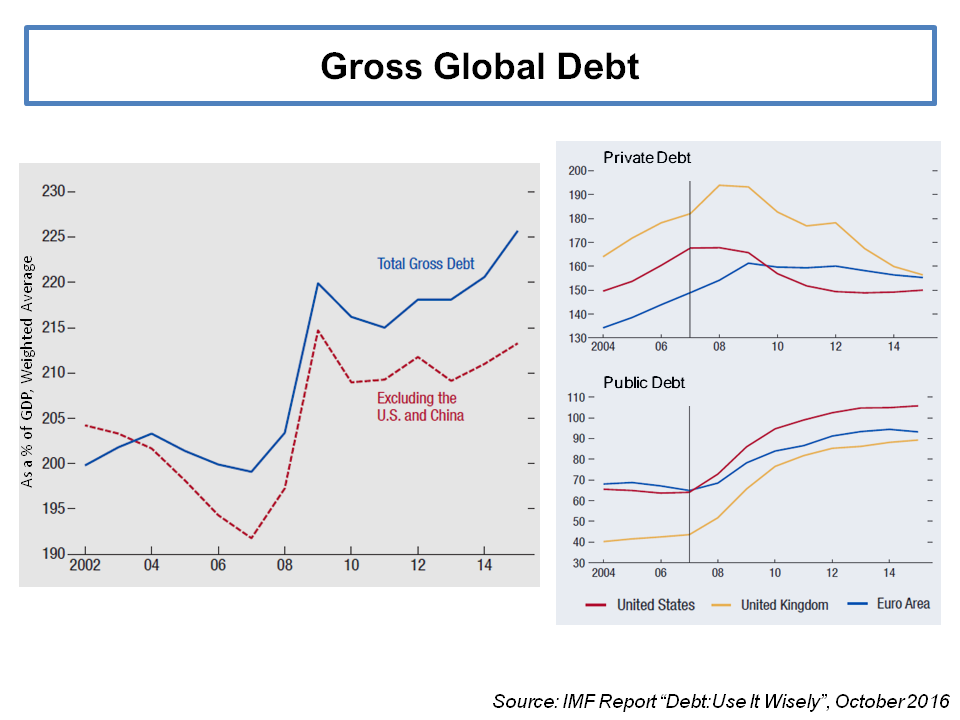
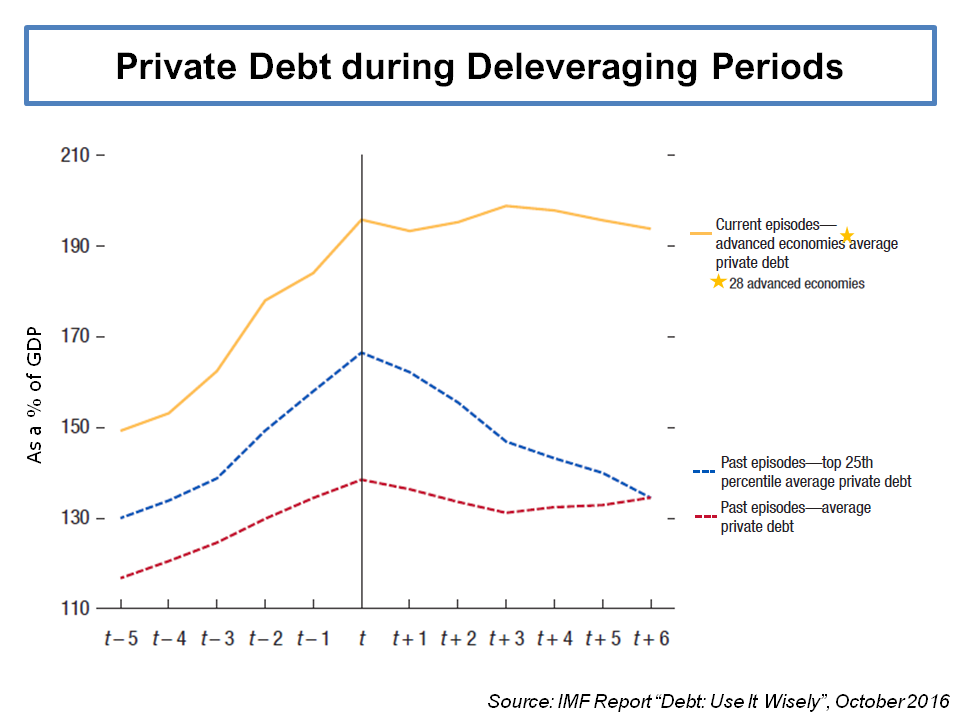
Goldman Sachs says “we have more potential for shocks right now”. Deutsche Bank and Bank of America Merrill Lynch predict a pick-up in volatility to hit equities. The ever positive Albert Edwards of Socgen points to a recent IMF report on debt and trashes the Fed with the quip “these dudes will never identify an asset bubble at least before the event!

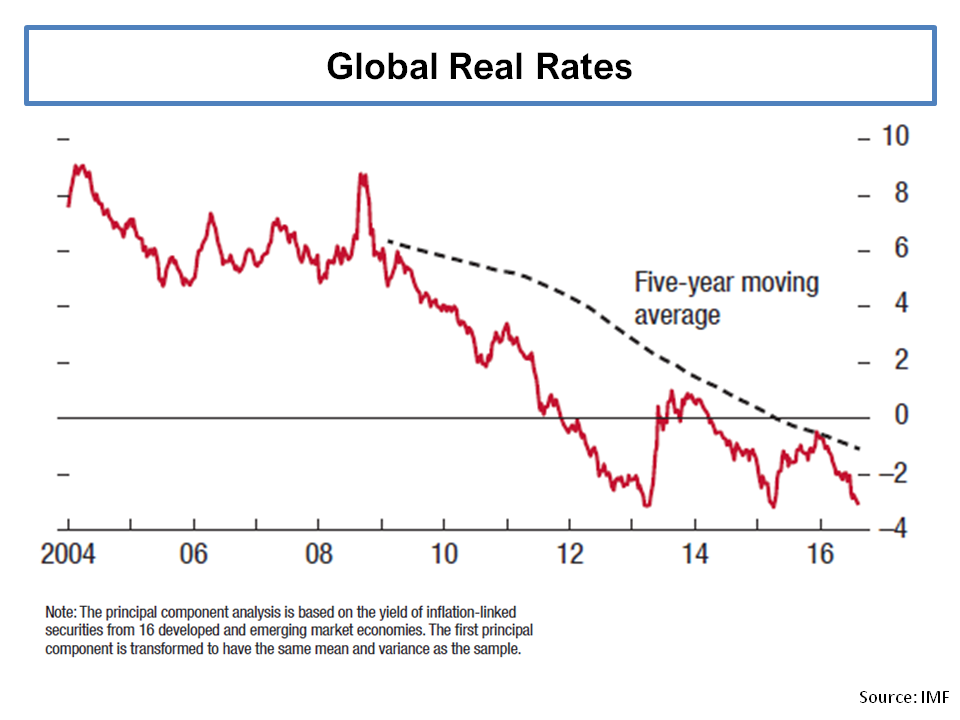
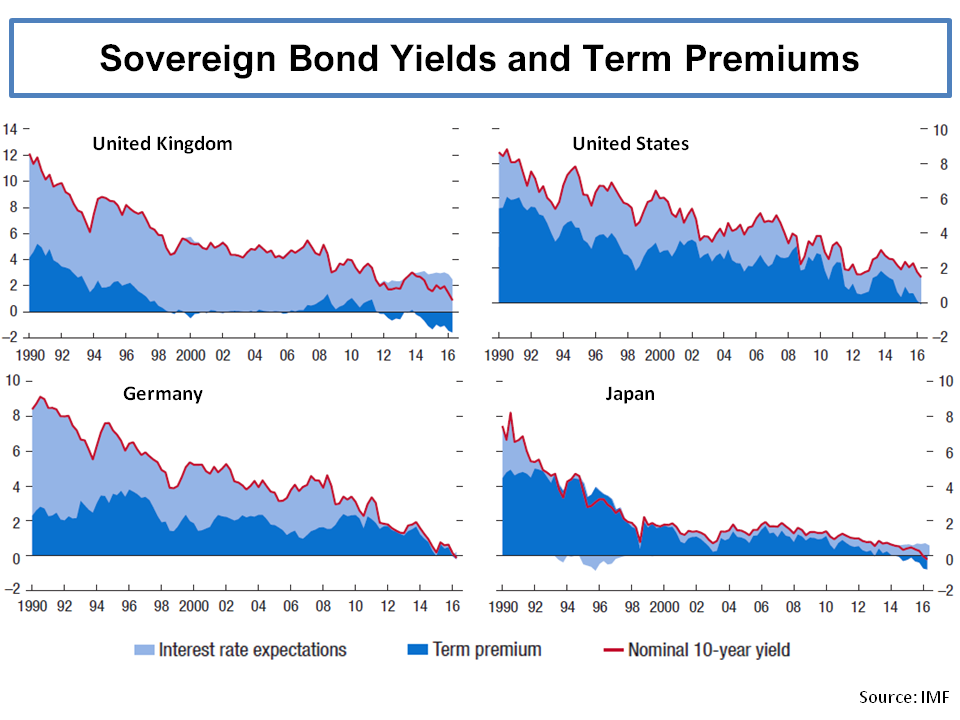
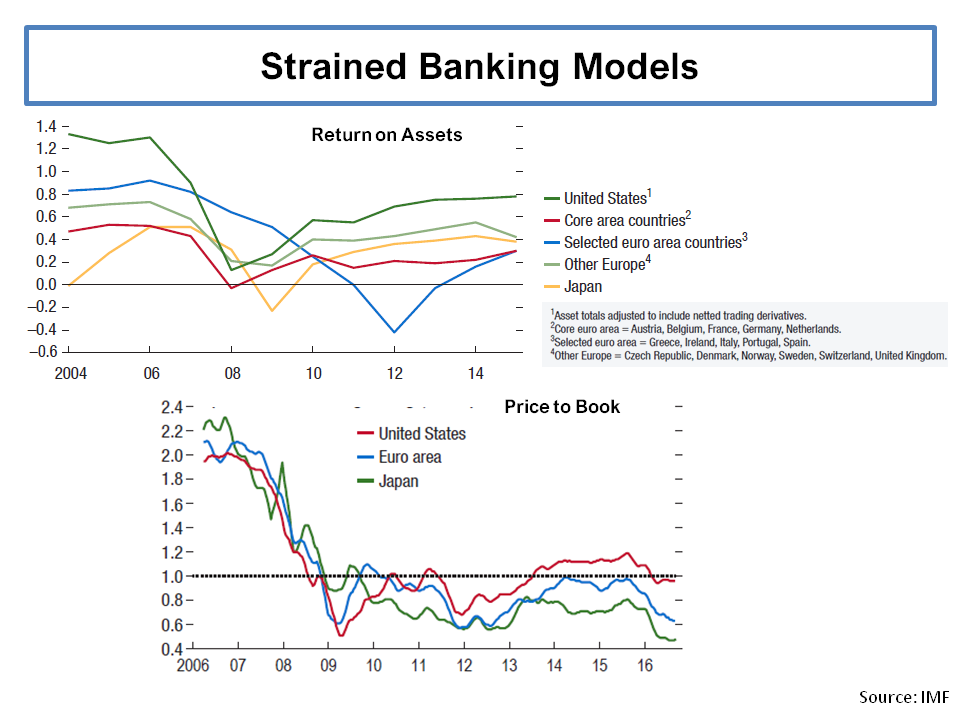
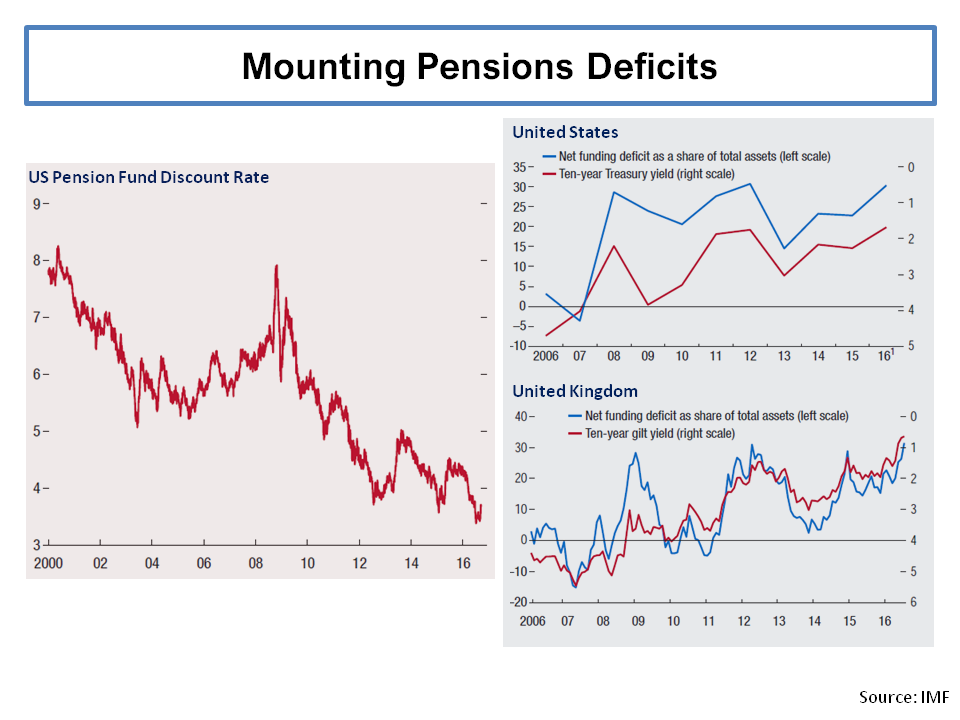
In the IMF report referenced above, and other reports published by the IMF this month, there is some interesting analysis and a sample of the accompanying graphs are reproduced below.

All of these graphs show trends going inexorably in one direction. Add in dollops of (not unrelated) political risk particularly in the UK and across Europe, and that direction looks like trouble ahead.

click to enlargeimf-gross-global-debt-as-of-gdp

click to enlargeimf-private-debt-during-deleveraging-periods

click to enlargeimf-decomposition-of-equity-valuations-october-2016

click to enlargeimf-global-real-rates

click to enlargeimf-report-sovereign-bond-yields-and-term-premiums

click to enlargeimf-report-banking-sector

click to enlargeimf-report-pension-deficits

Restrict the Renters?

It is no surprise that the populist revolt against globalisation in many developed countries is causing concern amongst the so called elite. The philosophy of the Economist magazine is based upon its founder’s opposition to the protectionist Corn Laws in 1843. It is therefore predictable that they would mount a strong argument for the benefits of free trade in their latest addition, citing multiple research sources. The Economist concludes that “a three pronged agenda of demand management, active labour-market policies and boosting competition would go a long way to tackling the problems that are unfairly laid at the door of globalisation”.

One of the studies referenced in the Economist articles which catch my eye is that by Jason Furman of the Council of Economic Advisors in the US. The graph below from Furman’s report shows the growth in return on invested capital (excluding goodwill)  of US publically quoted firms and the stunning divergence of those in the top 75th and 90th percentiles.

click to enlargereturn-on-invested-capital-us-nonfinancial-public-firms

These top firms, primarily in the technology sector, have increased their return on invested capital (ROIC) from 3 times the median in the 1990s to 8 times today, dramatically demonstrating their ability to generate economic rent in the digitized world we now live in.

Furman’s report includes the following paragraph:

“Traditionally, price fixing and collusion could be detected in the communications between businesses. The task of detecting undesirable price behaviour becomes more difficult with the use of increasingly complex algorithms for setting prices. This type of algorithmic price setting can lead to undesirable price behaviour, sometimes even unintentionally. The use of advanced machine learning algorithms to set prices and adapt product functionality would further increase opacity. Competition policy in the digital age brings with it new challenges for policymakers.”

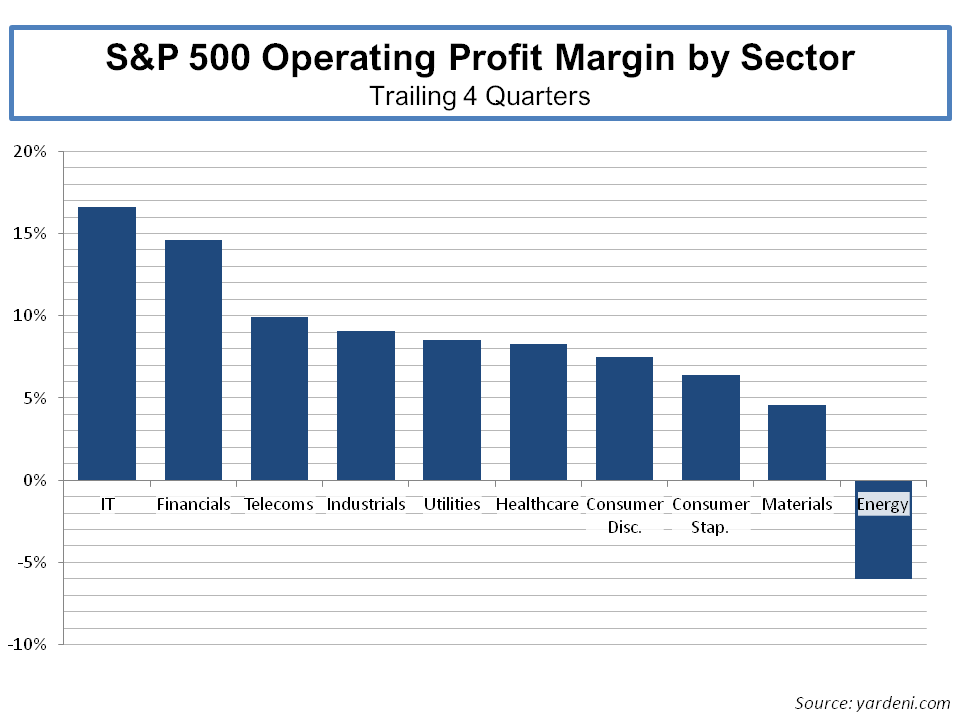
IT firms have the highest operating margins of any sector in the S&P500, as can be seen below.

click to enlargesp-500-operating-profit-margins-by-sector

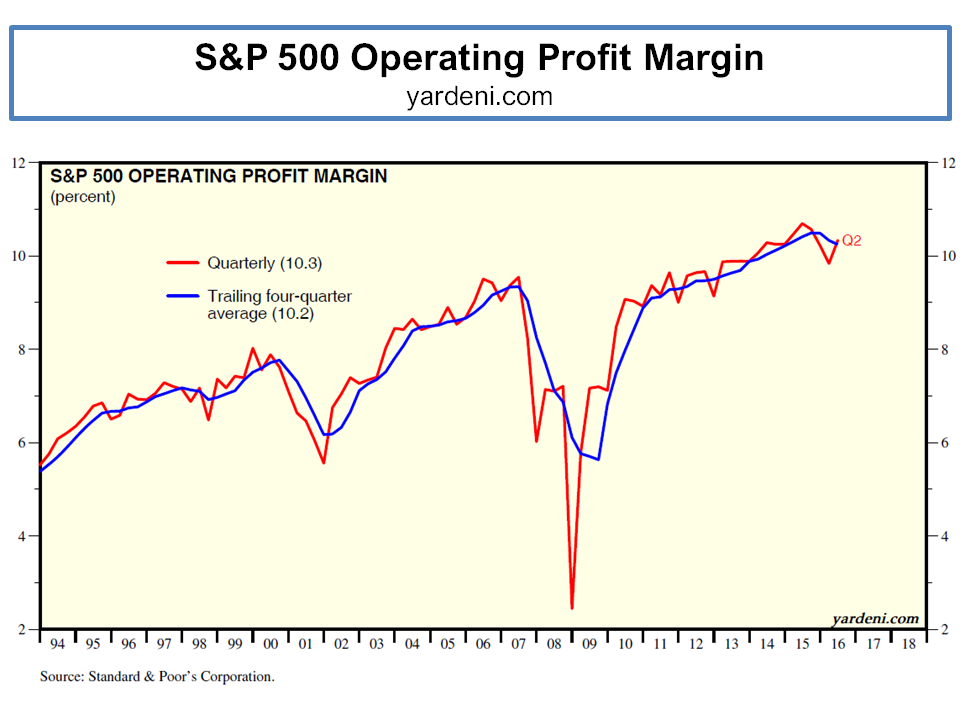
And the increasing size of these technology firms have contributed materially to the increase in the overall operating margin of the S&P500, as can also be seen below. These expanding margins are a big factor in the rise of the equity market since 2009.

click to enlargesp-500-historical-operating-profit-margins

It is somewhat ironic that one of the actions which may be needed to show the benefits of free trade and globalisation to citizens in the developed world is coherent policies to restrict the power of economic rent generating technology giants so prevalent in our world today…

EBA Bank Stress Tests

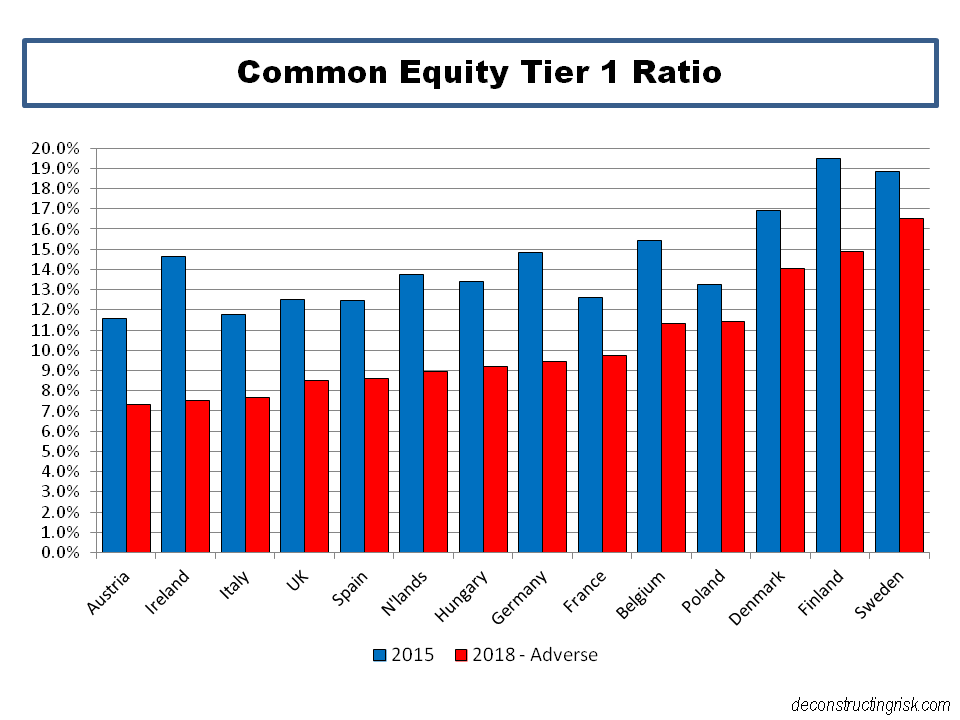
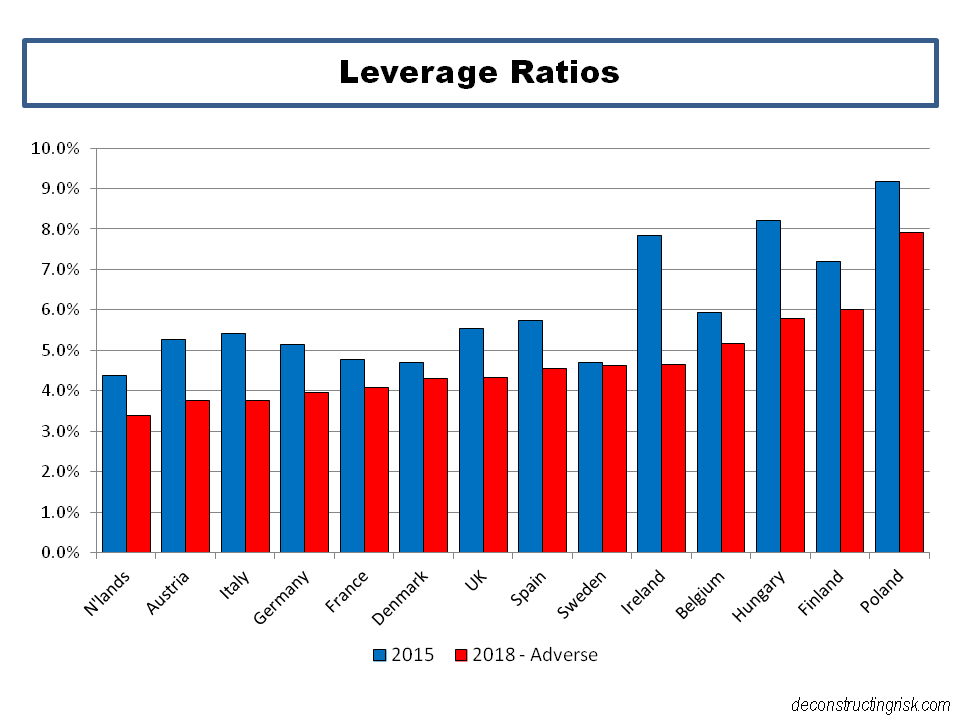
The results of the EBA stress tests on the largest European banks were released on Friday night. As expected, the Italian bank Monte Paschi performed badly. Rather than go into the results at a individual bank level, I thought it would be interesting to look at the results at a country level.

The first graph below shows the movement in the common equity tier 1 ratios under the adverse scenario by country.

click to enlarge2016 EBA Stress Test Common Equity Tier 1 Ratios by country

The next graph below shows the movement in the leverage ratios under the adverse scenario by country.

click to enlarge2016 EBA Stress Test Leverage Ratios by country

On the CET1 ratios, Ireland and Austria join Italy as the countries with the lowest aggregate ratios. The fall in Ireland’s ratios is particularly noticeable. In terms of the leverage ratios, Italy and Austria again appear in the bottom of the list. Perhaps surprisingly, the Netherlands is the lowest with Germany and France around 4%.

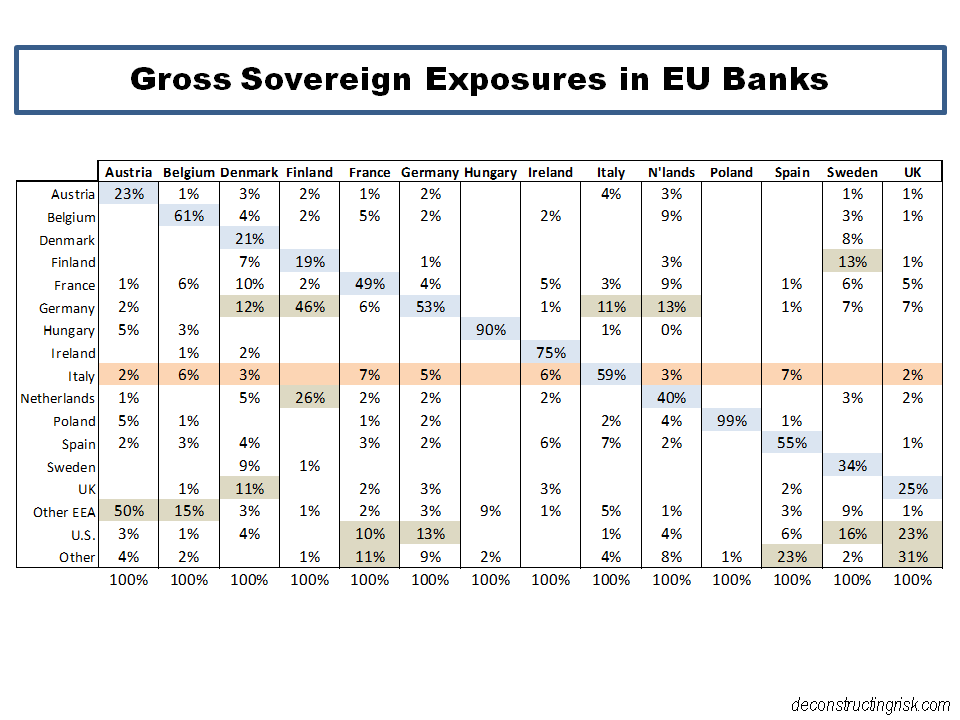
Another interesting piece of data from the EBA is the profile of sovereign exposures in the EU banks. In the exhibit below, I looked at these exposures to see if there is any insight that could be gained on risks from any potential breakup of the Euro (not a risk that’s talked about much these days but one that hasn’t gone away in my view).

click to enlargeGross Sovereign Exposures in EU Banks

A few things come to mind from this exhibit. Germany bonds are not held in as high quantities as I would of expected (except for the weird 46% from Finland, with other concentrations in Denmark, Italy and the Netherlands), likely to be a function of their yield. The strongest capitalized countries – Denmark, Finland and Sweden – have the lowest holding in their own bonds, with Denmark and Sweden having a particularly diverse spread of holdings. Italian bonds are widely held across a number of countries but not in large concentrations. Ireland holds most of the Irish exposure.

There is likely more food for thought  among the interesting data released by the EBA from these bank stress tests.


Pimping the Peers (Part 1)

Fintech is a much hyped term currently that covers an array of new financial technologies. It includes technology providers of financial services, new payment technologies, mobile money and currencies like bitcoin, robo-advisers, crowd funding and peer to peer (P2P) lending. Blockchain is another technology that is being hyped with multiple potential uses. I posted briefly on the growth in P2P lending and crowd-funding before (here and here) and it’s the former that is primarily the focus of this post.

Citigroup recently released an interesting report on the digital disruption impact of fintech on banking which covers many of the topics above. The report claims that $19 billion has been invested in fintech firms in 2015, with the majority focussed in the payments area. In terms of the new entrants into the provision of credit space, the report highlights that over 70% of fintech investments to date have being in the personal and SME business segments.

In the US, Lending Club and Prosper are two of the oldest and more established firms in the marketplace lending sector with a focus on consumer lending. Although each are growing rapidly and have originated loans in the multiple of billions in 2015, the firms have been having a rough time of late with rates being increased to counter poor credit trends. Public firms have suffered from the overall negative sentiment on banks in this low/negative interest rate environment. Lending Club, which went public in late 2014, is down about 70% since then whilst Prosper went for institutional investment instead of an IPO last year. In fact, the P2P element of the model has been usurped as most of the investors are now institutional yield seekers such as hedge funds, insurers and increasingly traditional banks. JP Morgan invested heavily in another US firm called OnDeck, an online lending platform for small businesses, late in 2015. As a result, marketplace lending is now the preferred term for the P2P lenders as the “peer” element has faded.

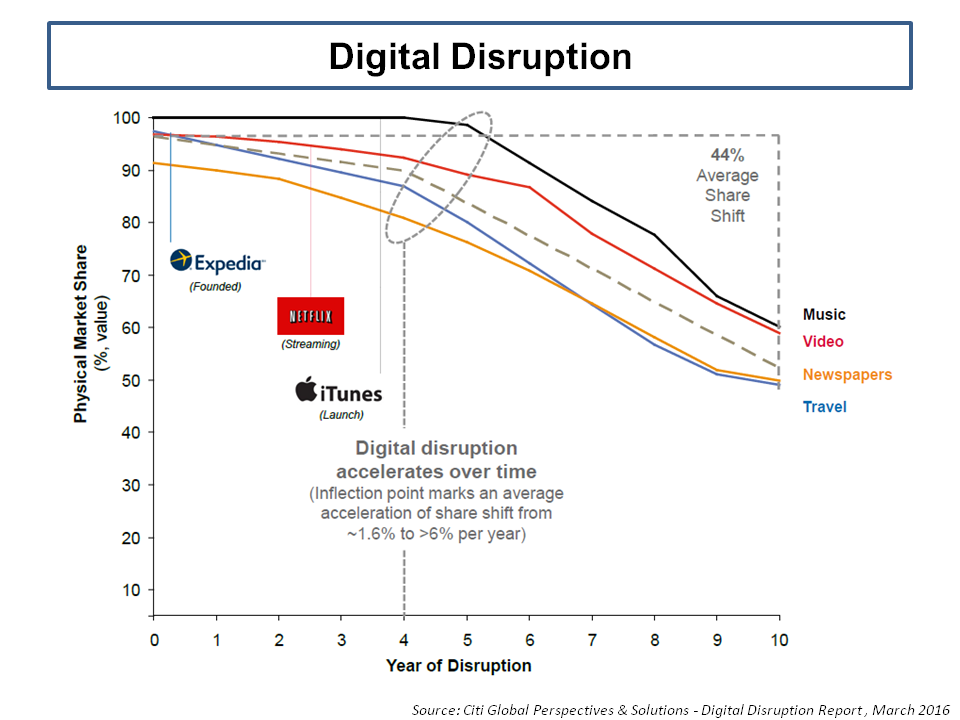
Just like other disruptive models in the technology age, eBay and Airbnb are examples, initially these models promised a future different from the past, the so called democratization of technology impact, but have now started to resemble new technology enabled distribution platforms with capital provided by already established players in their sectors. Time and time again, digital disruption has eroded distribution costs across many industries. The graphic from the Citi report below on digital disruption impact of different industries is interesting.

click to enlargeDigital Disruption

Marketplace lending is still small relative to traditional banking and only accounts for less than 1% of loans outstanding in the UK and the US (and even in China where its growth has been the most impressive at approx 3% of retail loans). Despite its tiny size, as with any new financial innovation, concerns are ever-present about the consequences of change for traditional markets.

Prosper had to radically change its underwriting process after a shaky start. One of their executives is recently quoted as saying that they “will soon be on our sixth risk model”. Marrying new technology with quality credit underwriting expertise (ignoring the differing cultures of each discipline) is a key challenge for these fledging upstarts. An executive in Kreditech, a German start-up, claimed that they are “a tech company who happens to be doing lending”. Critics point to the development of the sector in a benign default environment with low interest rates where borrowers can easily refinance and the churning of loans is prevalent. Adair Turner, the ex FSA regulator, recently stirred up the new industry with the widely reported comment that “the losses which will emerge from peer-to-peer lending over the next five to 10 years will make the bankers look like lending geniuses”. A split of the 2014 loan portfolio of Lending Club in the Citi report as below illustrates the concern.

click to enlargeLending Club Loan By Type

Another executive from the US firm SoFi, focused on student loans, claims that the industry is well aware of the limitations that credit underwriting solely driven by technology imbues with the comment that “my daughter could come up with an underwriting model based upon which band you like and it would work fine right now”.  Some of the newer technology firms make grand claims involving superior analytics which, combined with technologies like behavioural economics and machine learning, they contend will be able to sniff out superior credit risks.

The real disruptive impact that may occur is that these newer technology driven firms will, as Antony Jenkins the former CEO of Barclays commented, “compel banks to significantly automate their business”. The Citigroup report has interesting statistics on the traditional banking model, as per the graphs below. 60% to 70% of employees in retail banking, the largest profit segment for European and US banks, are supposedly doing manual processing which can be replaced by automation.

click to enlargeBanking Sector Forecasts Citi GPS

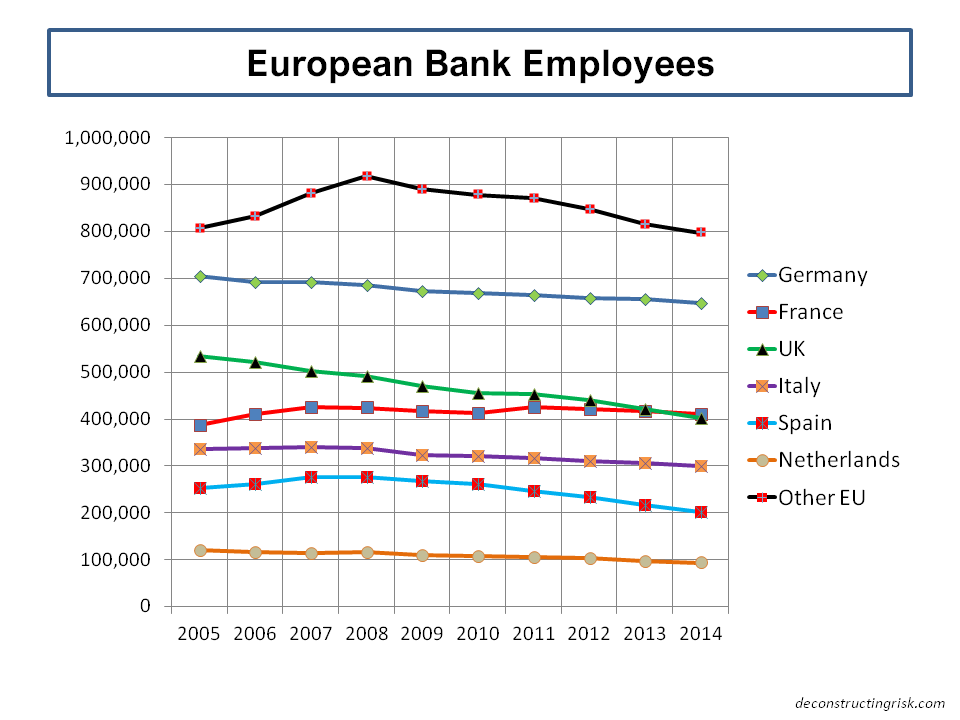
Another factor driving the need to automate the banks is the cyber security weaknesses in patching multiple legacy systems together. According to the Citigroup report, “the US banks on average appear to be about 5 years behind Europe who are in turn about a decade behind Nordic banks”. Within Europe, it is interesting to look at the trends in bank employee figures in the largest markets, as per the graph below. France in particular looks to be out of step with other countries.

click to enlargeEuropean Bank Employees

Regulators are also starting to pay attention. Just this week, after a number of scams involving online lenders, the Chinese central bank has instigated a crack down and constituted a multi-agency task force. In the US, there could be a case heard by the Supreme Court which may create significant issues for many online lenders. The Office of the Comptroller of the Currency recently issued a white paper to solicit industry views on how such new business models should be regulated. John Williams of the San Francisco Federal Reserve recently gave a speech at a recent marketplace lending conference which included the lucid point that “as a matter of principle, if it walks like a duck and quacks like a duck, it should be regulated like a duck”.

In the UK, regulators have taken a gentler approach whereby the new lending business models apply for Financial Conduct Authority authorisation under the 36H regulations, which are less stringent than the regimes which apply to more established activities, such as collective investment schemes. The FCA also launched “Project Innovate” last year where new businesses work together with the FCA on their products in a sandbox environment.

Back in 2013, I asked the question whether financial innovation always ended in lower risk premia in this post. In the reinsurance sector, the answer to that question is yes in relation to insurance linked securities (ILS) as this recent post on current pricing shows. It has occurred to me that the new collateralised ILS structures are not dissimilar in methodology to the 100% reserve banks, under the so-called Chicago plan, which economists such as Irving Fisher, Henry Simons and Milton Friedman proposed in the 1930s and 1940s. I have previously posted on my difficulty in understanding how the fully collaterised insurance model can possibly accept lower risk premia than the traditional “fractional” business models of traditional insurers (as per this post). The reduced costs of the ILS model or the uncorrelated diversification for investors cannot fully compensate for the higher capital required, in my view. I suspect that the reason is hiding behind a dilution of underwriting standards and/or leverage being used by investors to juice their returns. ILS capital is now estimated to make up 12% of overall reinsurance capital and its influence on pricing across the sector has been considerable. In Part 2 of this post, I will look into some of the newer marketplace insurance models being developed (it also needs a slick acronym – InsurTech).

Marketplace lending is based upon the same fully capitalized idea as ILS and 100% reserve banks. As can be seen by the Citigroup exhibits, there is plenty of room to compete with the existing banks on costs although nobody, not yet anyway, is claiming that such models have a lower cost of capital than the fractional reserve banks. It is important not to over exaggerate the impact of new models like marketplace lending on the banking sector given its current immaterial size. The impact of technology on distribution channels and on credit underwriting is likely to be of greater significance.

The indirect impact of financial innovation on underwriting standards prior to the crisis is a lesson that we must learn. To paraphrase an old underwriting adage, we should not let the sweet smell of shiny new technology distract us from the stink of risk, particularly where such risk involves irrational human behaviour. The now infamous IMF report in 2006 which stated that financial innovation had “increased the resilience of the financial system” cannot be forgotten.

I am currently reading a book called “Between Debt and the Devil” by the aforementioned Adair Turner where he argues that private credit creation, if left solely to the free market under our existing frameworks, will overfund secured lending on existing real estate (which my its nature is finite), creating unproductive volatility and financial instability as oversupply meets physical constraints. Turner’s book covers many of the same topics and themes as Martin Wolf’s book (see this post). Turner concludes that we need to embrace policies which actively encourage a less credit intensive economy.

It is interesting to see that the contribution of the financial sector has not reduced significantly since the crisis, as the graph on US GDP mix below illustrates. The financialization of modern society does not seem to have abated much since the crisis. Indeed, the contribution to the value of the S&P500 from the financials has not decreased materially since the crisis either (as can be seen in the graph in this post).

click to enlargeUS GDP Breakdown 1947 to 2014

Innovation which makes business more efficient is a feature of the creative destruction capitalist system which has increased productivity and wealth across generations. However, financial innovation which results in changes to the structure of markets, particularly concerning banking and credit creation, has to be carefully considered and monitored. John Kay in a recent FT piece articulated the dangers of our interconnected financial world elegantly, as follow:

Vertical chains of intermediation, which channel funds directly from savers to the uses of capital, can break without inflicting much collateral damage. When intermediation is predominantly horizontal, with intermediaries mostly trading with each other, any failure cascades through the system.

When trying to understand the potential impacts of innovations like new technology driven underwriting, I like to go back to an exhibit I created a few years ago trying to illustrate how  financial systems have been impacted at times of supposed innovation in the past.

click to enlargeQuote Money Train

Change is inevitable and advances in technology cannot, nor should they, be restrained. Human behaviour, unfortunately, doesn’t change all that much and therefore how technological advances in the financial sector could impact stability needs to be ever present in our thoughts. That is particularly important today where global economies face such transformational questions over the future of the credit creation and money.