Tag Archives: uncertainty

A string of worst evers

As the COVID19 deaths peak, in the first wave at least, across much of the developed world the narrative this week has moved to exit strategies. The medical situation remains highly uncertain, as the article in the Atlantic illustrated. A core unknown, due to the lack of extensive antibody testing, is the percentage of populations which have been infected and the degree of antibodies in those infected. What initially seemed to me to be a reasonable exit framework announced by the US has been fraught with execution uncertainty over the quantity and quality of the testing required, exasperated by the divisive ramblings of the man-child king (of the Orangeness variety).

The economic news has been dismal with a string of worst ever’s – including in retail sales, confidence indices, unemployment, energy and manufacturing. The number of turned over L shaped graphs is mind-blowing. And that’s only in the US! The exhibit below stuck me as telling, particularly for an economy fuelled by consumer demand.

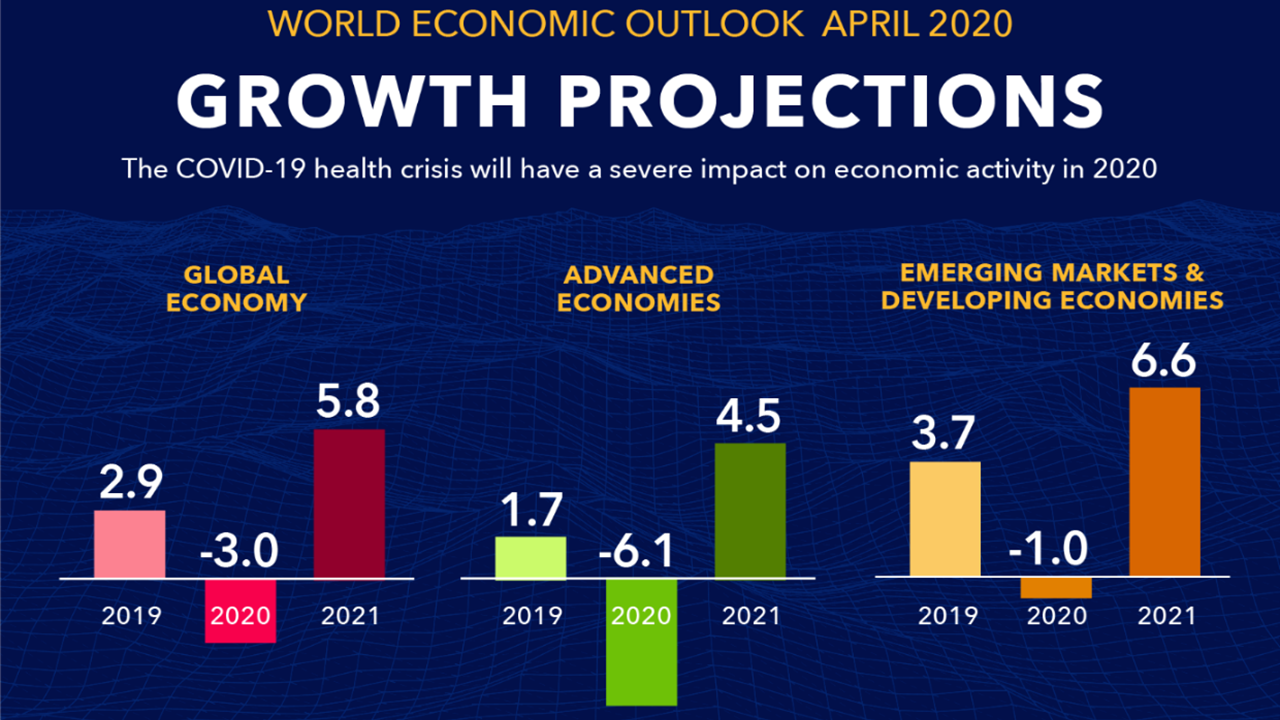
In the words of the great Charlie Munger: “This thing is different. Everybody talks as if they know what’s going to happen, and nobody knows what’s going to happen.” The equally wise Martin Wolf of the FT, who penned an article this week called “The world economy is now collapsing” posted a video of his thoughts here. His article was based upon the release of the latest IMF economic forecasts, as below.

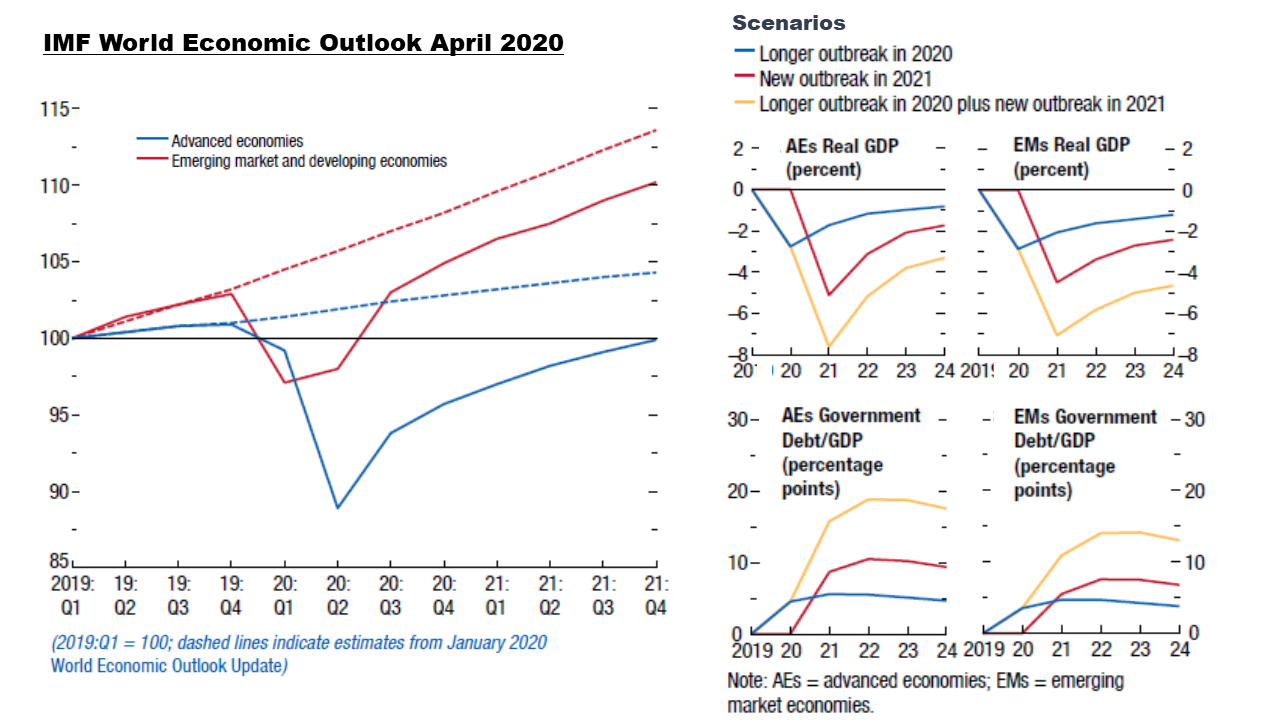
The IMF “baseline” assumes a broad economic reopening in the H2 2020. The IMF also details 3 alternative scenarios:

  • Lockdowns last 50% longer than in the baseline.
  • A second wave of the virus in 2021.
  • In the third, a combination of 1) and 2).

The resulting impacts on real GDP and debt levels for the advanced and emerging/developing countries respectively are shown below.

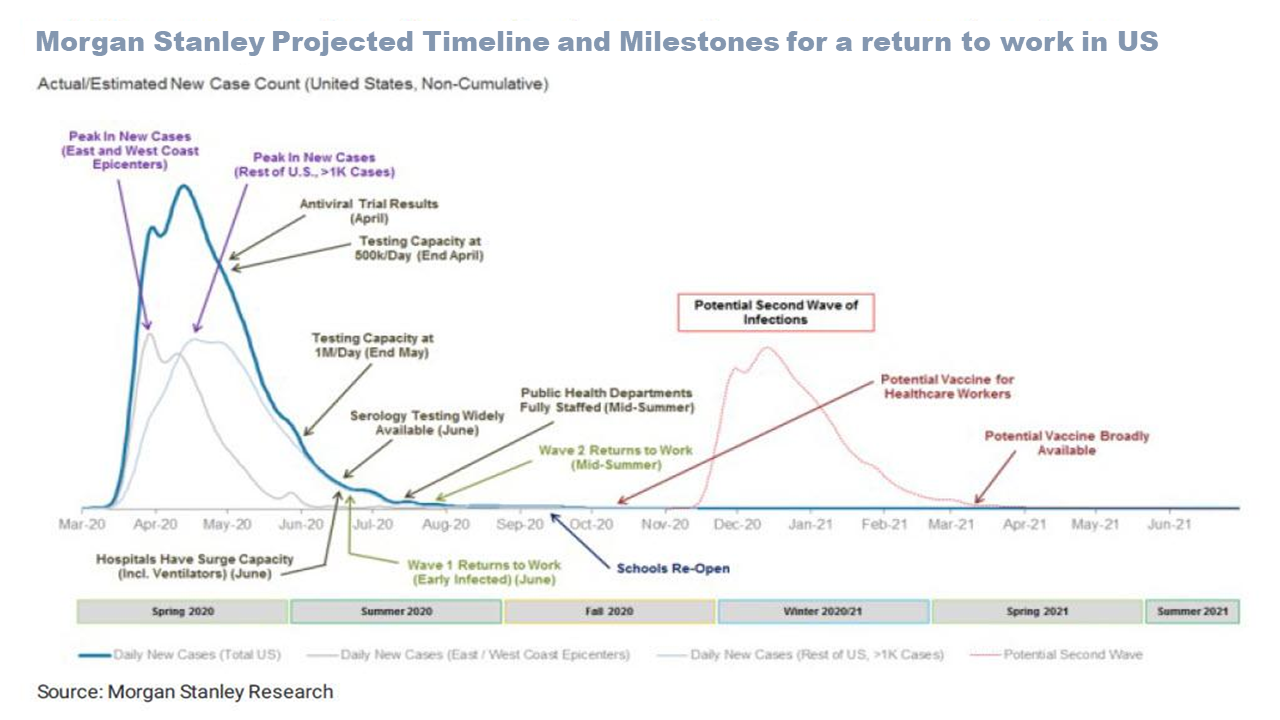
A few other interesting projections released this week include this one from Morgan Stanley.

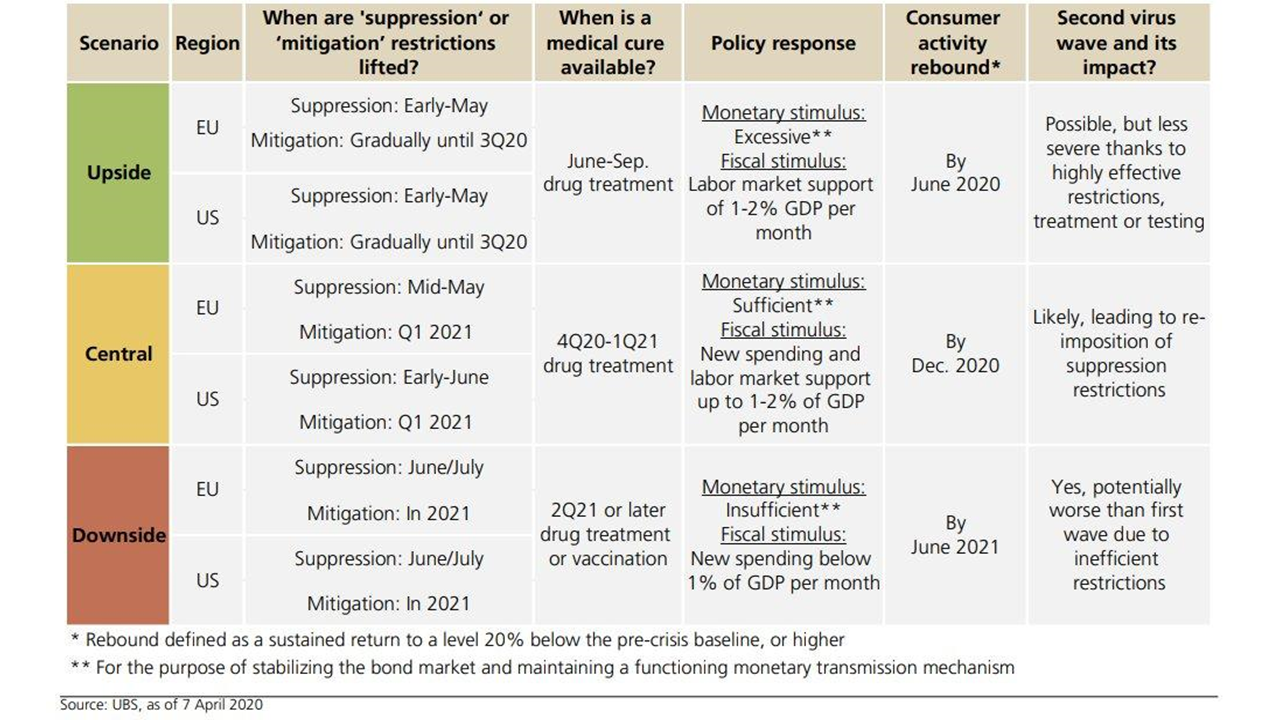
And this one from UBS.

And this one from JP Morgan.

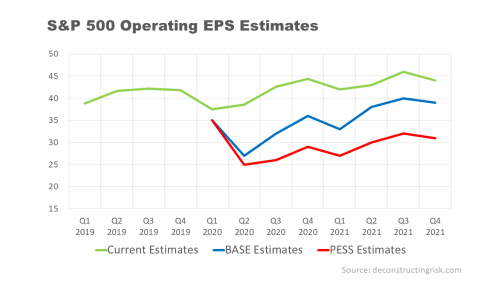
In terms of S&P500 EPS numbers, this week will provide some more clarity with nearly 100 firms reporting. Goldman’ estimates for 2020 compared to my previous guestimates (2020 operating EPS of $103 versus $130 and $115 in base and pessimistic) were interesting this week given the negative figure for Q2 before returning to over $50 for Q4. The “don’t fight the fed” and TINA merchants amongst the current bulls have yet to confront the reality of this recession for 2021 earnings where the fantasy of an EPS above $170 for 2021 will become ever apparent with time in my opinion. Even an optimistic forward multiple of 14 on a 2021 operating EPS of $150 implies a 25% fall in the S&P500. And I think that’s la la land given the numbers that are now emerging! We’ll see what this week brings…..

Stay safe.

Peak Uncertainty

As we face the peak weeks of the COVID19 virus in the major developed economies, one thing the current COVID19 outbreak should teach us is humility. As humans, we have become far too arrogant about our ability to shape the future. A new book by the economists John Kay and Mervyn King (a former Bank of England governor during the financial crisis) called “ Radical Uncertainty” argues that economists have forgotten the distinction between risk and uncertainty with an over-reliance on using numerical probabilities attached to possible outcomes as a substitute for admitting there are uncertainties we cannot know. How many one in a century events seem to be happening on a regular basis now? Their solution is to build more resilient systems and strategies to confront unpredictable events. Such an approach would have a profound impact on how we organise our societies and economies.

Currently, planning for events with a large impact multiplied by a small probability allows us to effectively continue as we have been after assigning the minimal amount of contingency. Imagine if sectors and industries were run based on been prepared for tail events. That would be a radical change. Very different from our just in time supply chains which minimise capital allocation and maximise return on investment. Our approach to climate change is an obvious case in point and how we have heretofore ignored the environmental externalities of our societies and economies. Given the financial costs this crisis is going to place on future generations, I would suspect that the needs of this cohort of our society will become ever more urgent in the aftermath of the COVID19 pandemic.

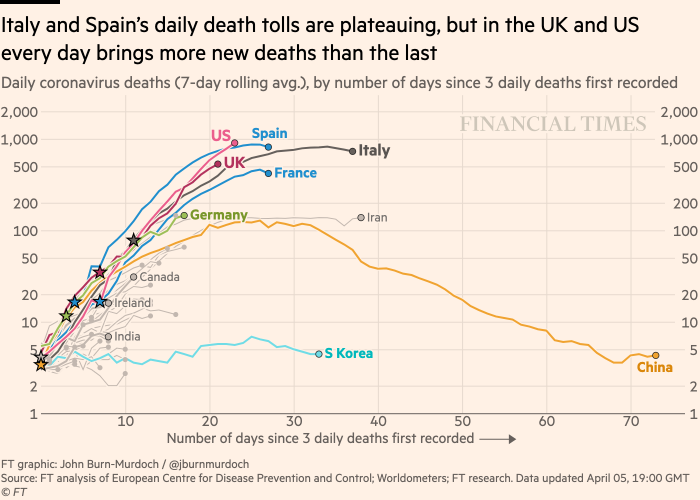
As many people grapple with the current uncertainties presented by this pandemic, we are currently at peak uncertainty in Europe and the US. We are only now getting a sense of how the outbreak is peaking in Europe given the lock down measures in place. How the virus reactions to the relaxation of current measures, how the outbreak will peak across the US and other continents, the economic impact of the outbreak, or the societal impact amongst many other issues are as yet unknown. We do know however that with time over the coming weeks some of these answers will become clearer. For example, as the graph below from the FT shows, we known the approximate path of the outbreak given the policies being pursued today.

A positive narrative could be that existing medications pass rushed COVID19 trials and prove they can blunt the impact of the virus thereby altering the shape of the curve. We can also speculate that once the first wave is contained, we will develop strategies on a combination of mitigation measures (e.g. reduced isolation methods, antibody and other testing to return sections of the population to work, immunity passports, etc) to slowly transition to the new normal. The logistics of such a phased return to normal will be complex and a nightmare to enforce, particularly if self-isolation measures are in force for lengthy periods and people believe any second wave can be well contained by battle hardened health systems. We can be confident that a vaccine will be developed, hopefully by early 2021, but it will take time to get the vaccine distributed and administered in bulk. Mid 2021 is likely the best we can realistically hope for.

At this stage, my rough guess at a base case scenario on the timing for European and US lockdown is 3 to 5 weeks with another 6 to 10 weeks to transition to a semi-new normal. That’s somewhere between mid-June and early August with Europe leading the way followed by the US. A more pessimistic case could be that discipline amongst the population gets more lax as the weeks drag on and a second wave gathers momentum with a second lockdown required over the summer followed by a more timid and gradual transition afterwards lasting until the end of the year. Obviously, these timings are pure guesses at this time and may, and hopefully will, prove way off base.

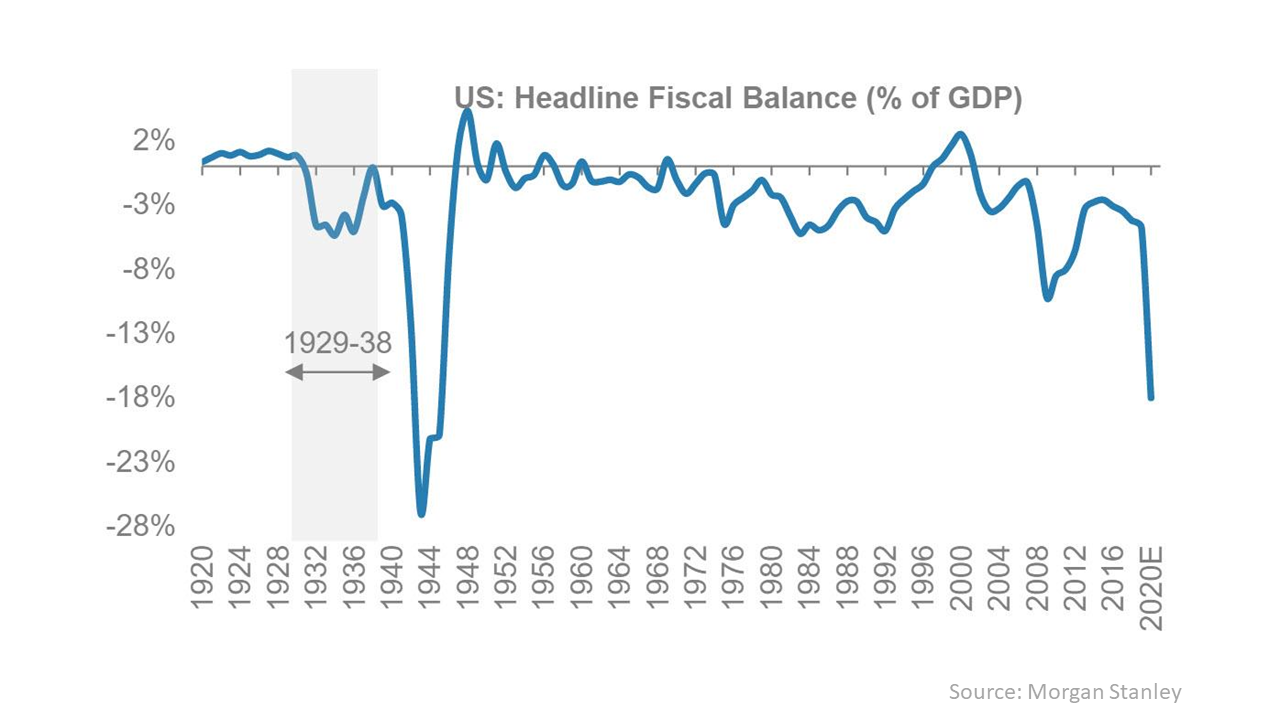
The economic impacts are highly uncertain but will become clearer as the weeks pass. For example, with just the first fiscal stimulus package passed in the US, the politicians are already listing their priorities for the second (and likely not to be the last either), Morgan Stanley expect the cyclically adjusted primary fiscal deficit to rise to 14% of GDP and the headline fiscal deficit at 18% of GDP in 2020, as per their graphic below. Given the unknown impact of the crisis on GDP numbers, these percentages could approach 15% to 20% with total debt of 110% to 120%. It’s depressing to note that prior to this crisis the IMF said the U.S. debt-to-GDP was already on an unsustainable path.

Although the euro zone comes into the crisis with less debt, last year it was 86% of GDP, Jefferies said in a ‘worse case’ outcome where nominal GDP falls 15% this year, the bloc’s budget gap would balloon to 17% of GDP from just 0.8% last year. They estimate in this scenario that the euro zone debt-GDP ratio could rise above 100% in 2021. As a percentage of GDP, Morgan Stanley estimated the G4+China cyclically adjusted primary deficit could rise to 8.5% of GDP in 2020, significantly higher than the 6.5% in 2009 immediately after the global financial crisis. Unemployment rates in the short term are projected to be mind boggling horrible at 20%+ in some countries. It seems to me that the austerity policies pursued after the financial crisis will not be as obvious an answer to repayment of this debt, not if we want western societies to survive. Addressing generational and structural income inequalities will have to be part of the solution. Hopefully, an acceleration of nationalism wouldn’t.

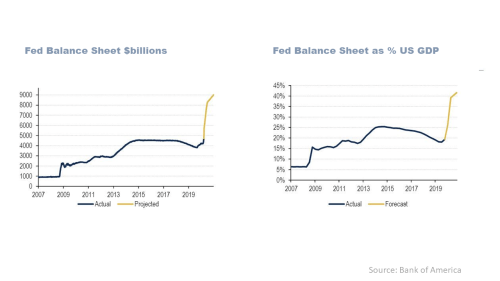
On the monetary side, the Fed’s balance sheet is now estimated to be an unprecedented $6 trillion, an increase of $1.6 trillion since the start of the Fed’s unprecedented bailout on the 13th of March. Bank of America estimates it could reach $9 trillion or 40% of GDP, as per the graphs below.
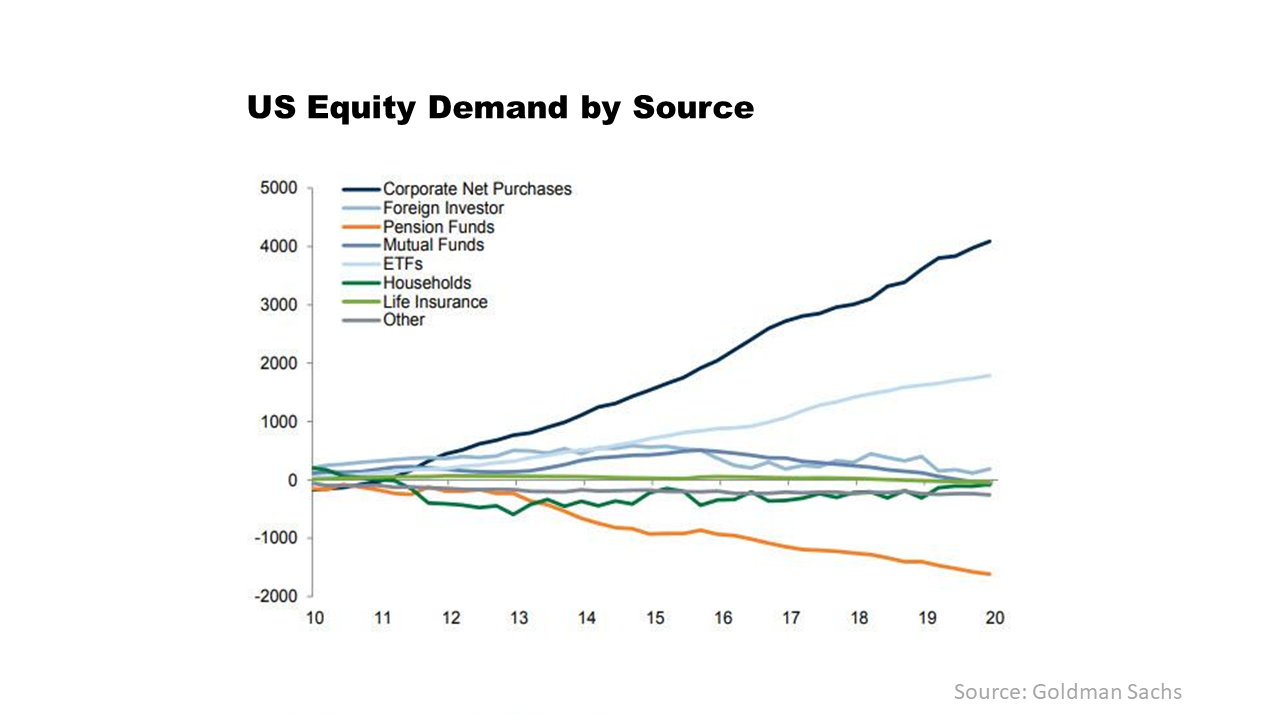
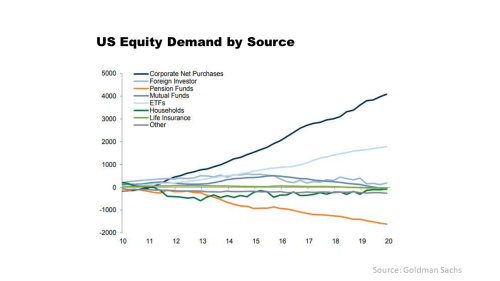
As to corporates and the stock market, dividends will undoubtably be under pressure as corporate delevering takes hold and without the crack cocaine of the bull market, share buybacks as the graph below shows, I fear there will be more pressure on valuations. The Q1 results season and forward guidance (or lack thereof), although it may have some surprises from certain firms in the communication, technology and consumer staples space, will likely only compound the negativity and uncertainty.
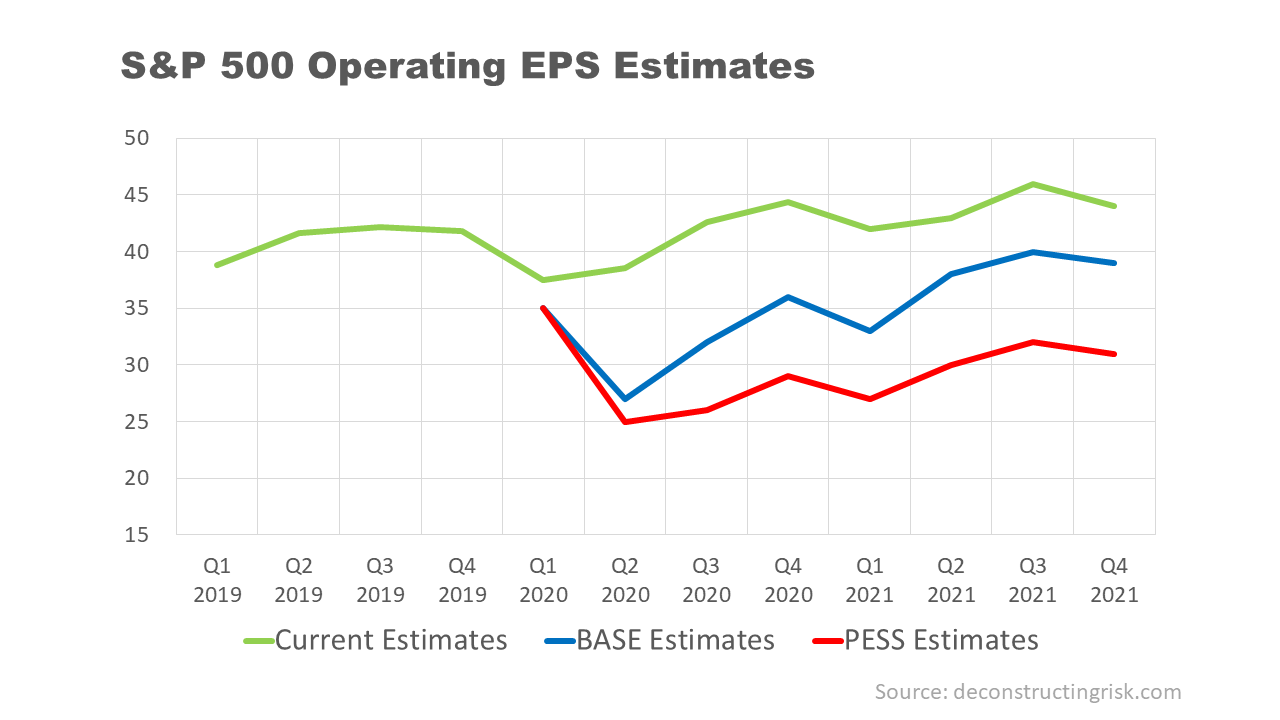
Using unscientific guesses on my part, I have estimated base and pessimistic operating EPS figures for the S&P500 as below. Based upon a forward PE (on a GAAP EPS) of 15 (approx. 12.75 on operating EPS basis), which is the level reached after the dot com bubble and the financial crisis, the resulting level for the S&P500 is 2,000 and 1,600 in the base and pessimistic scenarios respectively. That’s a further 20% and 35% drop from today’s levels respectively.
The coming weeks will likely be horrible in terms of human suffering and death across the developed world (one cannot even comprehend the potential suffering in the developing world if this insidious virus takes hold there). There is always hope and uncertainty will reduce over time. Major decisions will need to be made in the months and years ahead on the future of our societies. Learning from this pandemic to build more resilient societies and economies will be a task that lasts many years, possibility even generations. Major changes are coming after this health crisis subsides, hopefully they will be for the better.

Stay safe.

Creepy Things

It has been a while since I looked at the state of the reinsurance and specialty insurance markets. Recent market commentary and insurers’ narratives at recent results have suggested market rates are finally firming up, amidst talk of reserve releases drying up and loss creep on recent events.

Just yesterday, Bronek Masojada the CEO of Hiscox commented that “the market is in a better position than it has been for some time”. The Lancashire CEO Alex Maloney said he was “encouraged by the emerging evidence that the (re)insurance market is now experiencing the long-anticipated improvements in discipline and pricing”. The Chubb CEO Evan Greenberg said that “pricing continued to tighten in the quarter while spreading to more classes and segments of business, particularly in the U.S. and London wholesale market”.

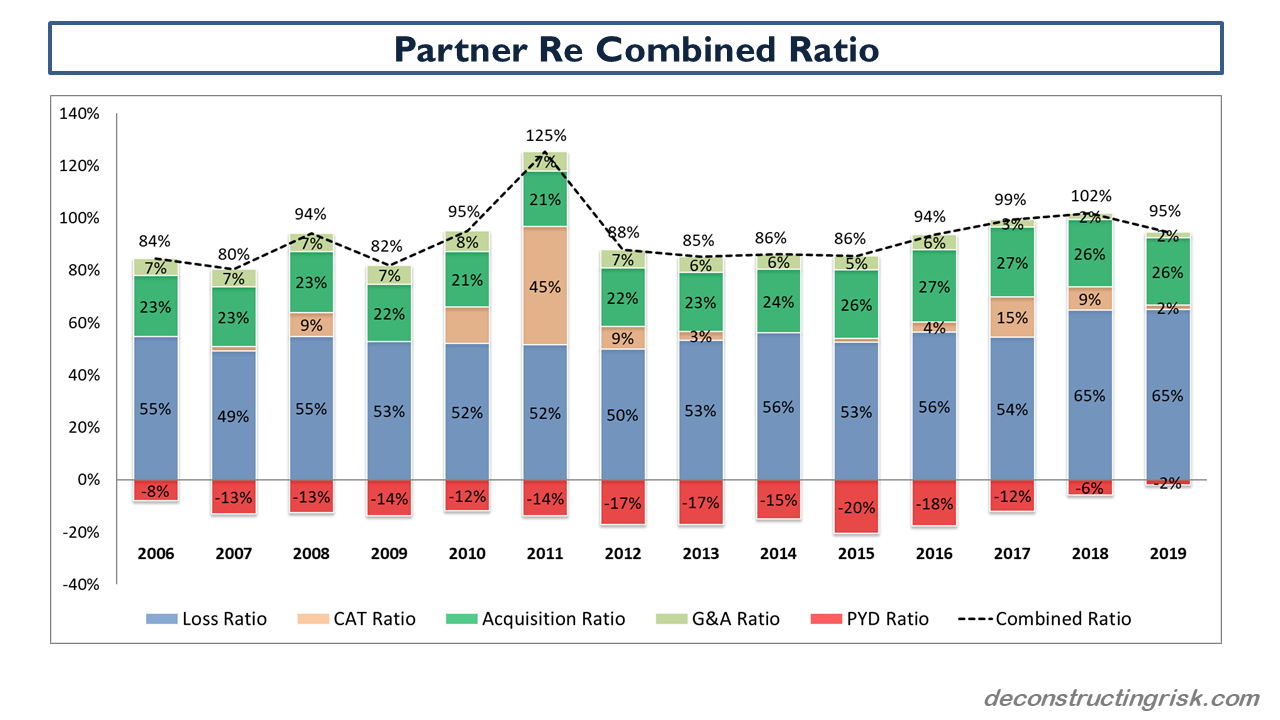
A look at the historical breakdown of combined ratios in the Aon Benfield Aggregate portfolio from April (here) and Lloyds results below illustrate the downward trend in reserve releases in the market to the end of 2018. The exhibits also indicate the expense disadvantage that Lloyds continues to operate under (and the reason behind the recently announced modernisation drive).

click to enlarge

click to enlarge

In the Willis Re mid-year report called “A Discerning Market” their CEO James Kent said “there are signs that the longstanding concern over the level of reserve redundancy in past year reserves is coming to fruition” and that in “some classes, there is a clear trend of worsening loss ratios in recent underwriting years due to a prolonged soft market and an increase in loss severity.

 In their H1 presentation, Hiscox had an exhibit that quantified some of the loss creep from recent losses, as below.

click to enlarge

The US Florida hurricane losses have been impacted by factors such as assignment of benefits (AOB) in litigated water claims and subsequently inflating repair costs. Typhoon Jebi losses have been impacted by overlapping losses and demand surge from Typhoon Trami, the Osaka earthquake and demand from Olympics construction. Arch CEO Marc Grandisson believes that the market missed the business interruption and contingent BI exposures in Jebi estimates.

The fact that catastrophic losses are unpredictable, even after the event, is no surprise to students of insurance history (this post on the history of Lloyds is a testament to unpredictability). Technology and advances in modelling techniques have unquestionably improved risk management in insurance in recent years. Notwithstanding these advances, uncertainty and the unknown should always be considered when model outputs such as probability of loss and expected loss are taken as a given in determining risk premium.

To get more insight into reserve trends, it’s worth taking a closer look at two firms that have historically shown healthy reserve releases – Partner Re and Beazley. From 2011 to 2016, Partner Re’s non-life business had an average reserve release of $675 million per year which fell to $450 million in 2017, and to $250 million in 2018. For H1 2019, that figure was $15 million of reserve strengthening. The exhibit below shows the trend with 2019 results estimated based upon being able to achieve reserve releases of $100 million for the year and assuming no major catastrophic claims in 2019. Despite the reduction in reserve releases, the firm has grown its non-life business by double digits in H1 2019 and claims it is “well-positioned to benefit from this improved margin environment”.

click to enlarge

Beazley is one of the best insurers operating from London with a long history of mixing innovation with a balanced portfolio. It has doubled its net tangible assets (NTA) per share over the past 10 years and trades today at a 2.7 multiple to NTA. Beazley is also predicting double digit growth due to an improving rating environment whilst predicting “the scale of the losses that we, in common with the broader market, have incurred over the past two years means that below average reserve releases will continue this year”.

click to enlarge

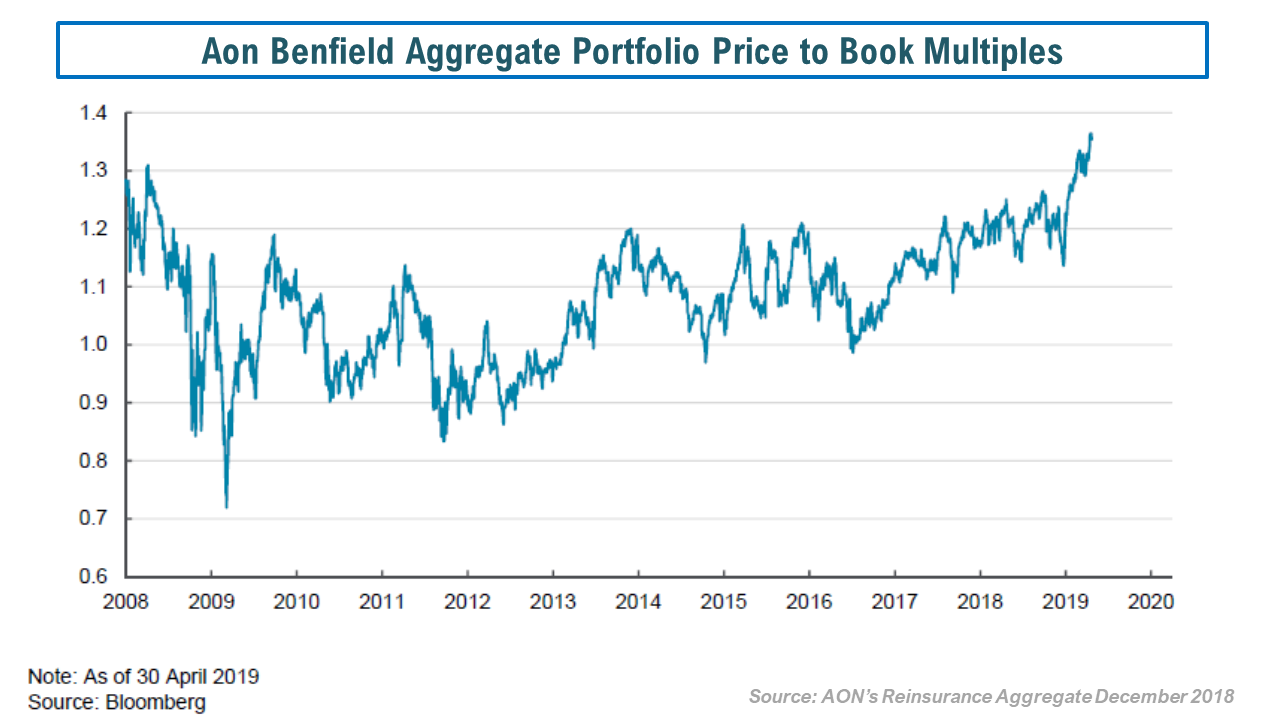
And that’s the rub. Although reserves are dwindling, rate improvements should help specialty (re)insurers to rebuild reserves and improve profitability back above its cost of capital, assuming normal catastrophe loss levels. However, market valuations, as reflected by the Aon Benfield price to book exhibit below, look like they have all that baked in already.

click to enlarge

And that’s a creepy thing.

Goldilocks Lives

With the S&P500 off its September high and US 10 year yields well over 3% back in October, its crazy to think that just 6 months later the 10-year yield is currently around 2.6% and the S&P500 has just hit new highs. What was all the fuss about! A return to a steady US GDP non-inflationary growth as per the Q1 figures and with Q1 earnings coming in ahead of reduced expectations (with approx. half of the S&P500 reported), one could be tempted to think we have returned to the good old Goldilocks days. My predictions (here) of a rebound off the December lows followed by more volatility in Q1 were well wide of the mark with volatility across major asset classes eerily low as the market hits new highs. My record of been wide of the mark has at least been consistent with this post from January last year calling a premature ending to Goldilocks!

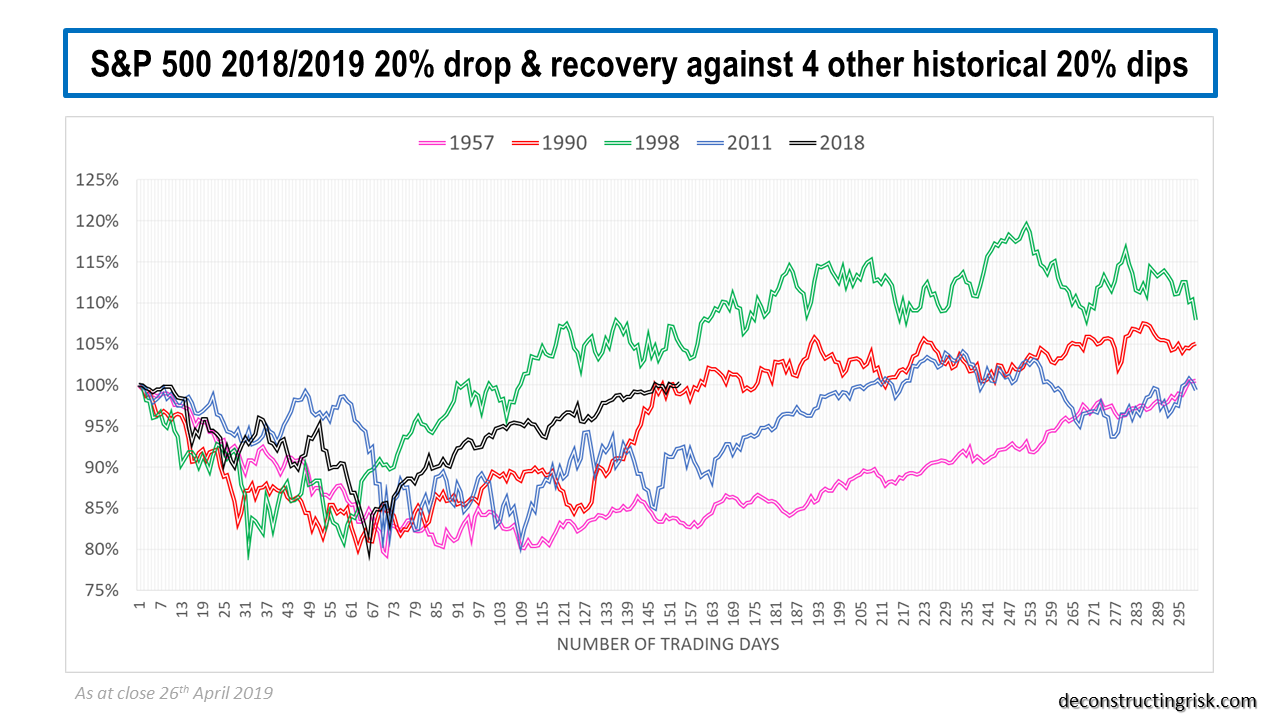
Some commentators are bullish on more upside for the market on the improved economic and earnings figures and cite comparisons to similar 20% drops and recoveries in 1998 and 2011. The graph below shows the comparisons, with 2 other 20% drops (although 1957 and 1990 were during recessions).

click to enlarge

As to what happens next, I have no idea. Some say at 17 times forward earnings; the market is not too expensive, and a wall of money will fuel this FOMO (fear of missing out) rally. Although the positive narrative from Q1 earnings will likely dictate short term trends, the market just feels like it has gotten ahead of itself to me and I feel comfortable taking some money off the table. As the graph below of monthly moves greater than +/- 3% shows, volatility is never that far away.

click to enlarge

A return to economic and earnings growth also raises the question of how long the Fed can remain ultra-accommodative. The arguments on raising rates and debts levels are all very déjà vu! For the moment however, unless the China trade talks fall apart, all looks surprisingly rosy.

There are always concerns. Bank of America recently highlighted that over the past five years, US firms have paid out $3.3 trillion in dividends and bought back $2.7 trillion of their own shares ($800 billion in 2018 alone) whilst taking on $2.5 trillion of new debt. The buybacks are responsible for 30% of earnings growth according to Bank of America (20% in 2018). The need to pay down this debt was a focus for many firms in the stock market rout. Bank of America predict further upside in equities to the summer before a pullback in Q3. The ever-excellent John Authers (ex-FT columnist now with Bloomberg) had an insightful article on corporate debt in March.

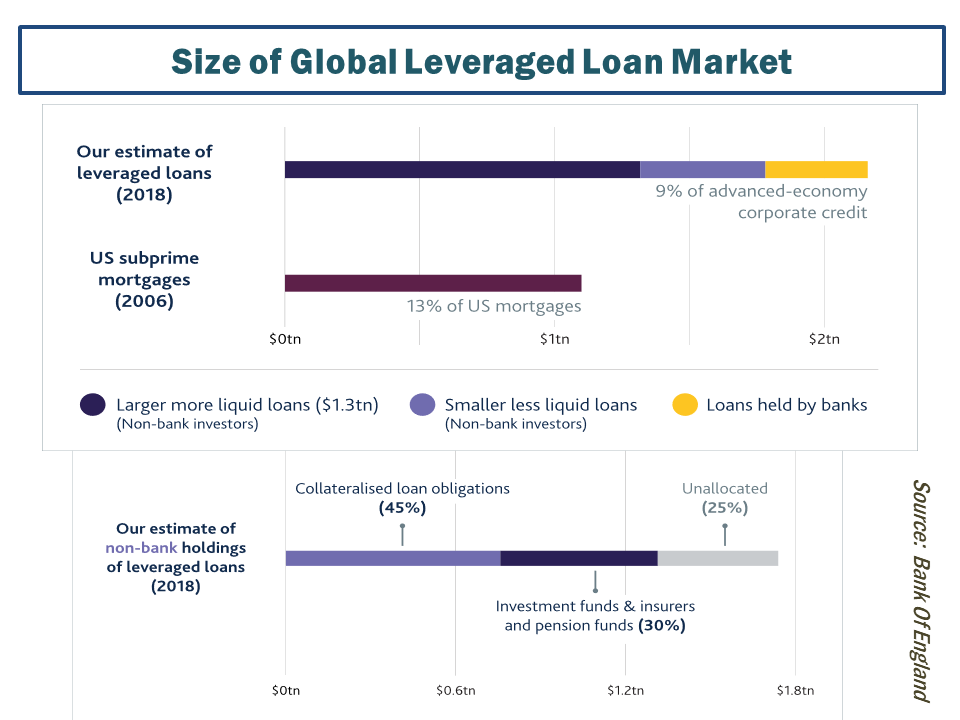
According to a recent report from Euler Hermes, the non-bank leveraged loan market is flattering the overall US corporate debt profile and corporate spreads are likely under estimating risk. This report from Moodys suggests that high leverage is offset by ample coverage of net interest expense. In this report, S&P estimate that “the proportion of companies having aggressive or highly leveraged financial risk has risen slightly to 61% (compared to 2009)”. Regulators also remain concerned about debt levels, particularly leveraged loans as per this recent report. The size of the leveraged loan market globally is estimated around $1.5 trillion, with the Bank of England estimates shown below.

click to enlarge

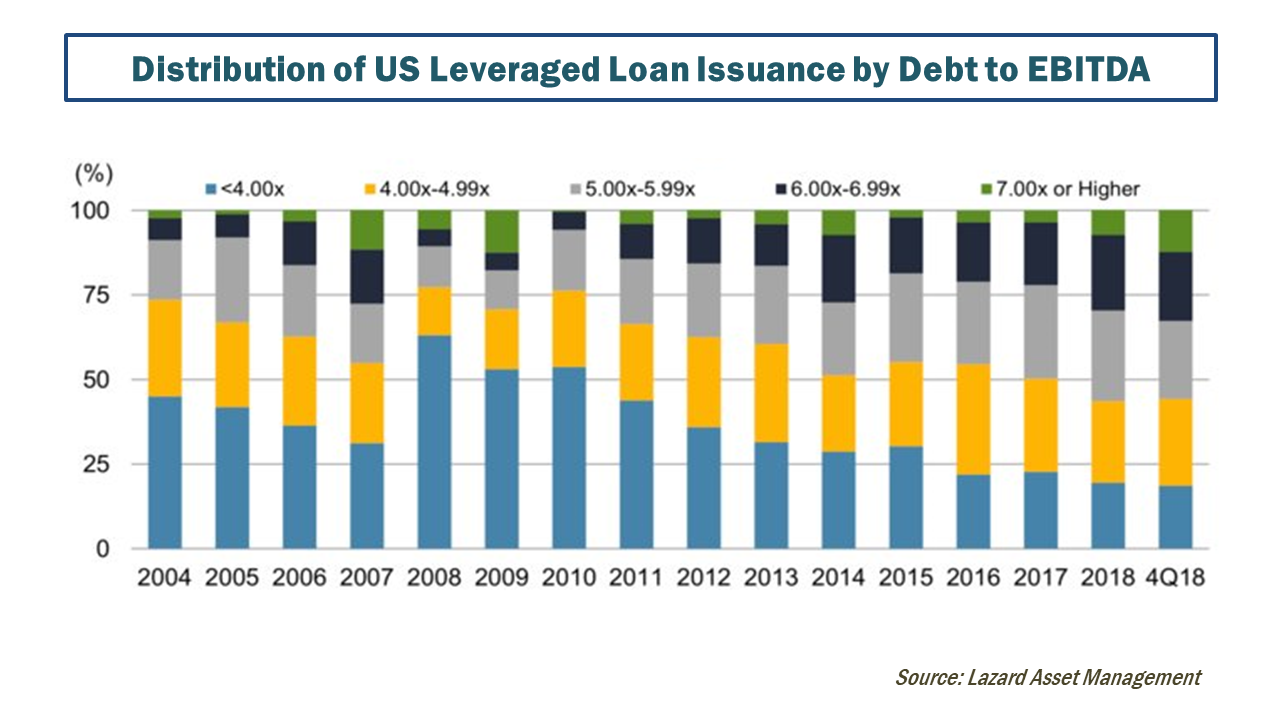
According to Ron Temple of Lazard Asset Management the “deterioration in underwriting standards for leveraged loans is increasingly worrisome” and the graph below shows the increased leverage in the market which combined with lax terms (approx. 80% are covenant lite loans) are a red flag in the event of any downturn.

click to enlarge

The buoyant private equity market is a testament to the joys of leverage, with recent PE raisings hitting records and an estimated $1.3 trillion of undeployed capital as of March. In this recent FT article, Jonathan Lavine of Bain Capital warned that private equity groups are taking on too much debt in the competition to win deals (the Bain 2019 market report is well worth a read).

Still, these are all things to worry about in times of stress. As of now, let’s enjoy Goldilocks return and keep dancing. Carefully mind you, it is late and we don’t want to wake those bears.

Risk-O-Meter

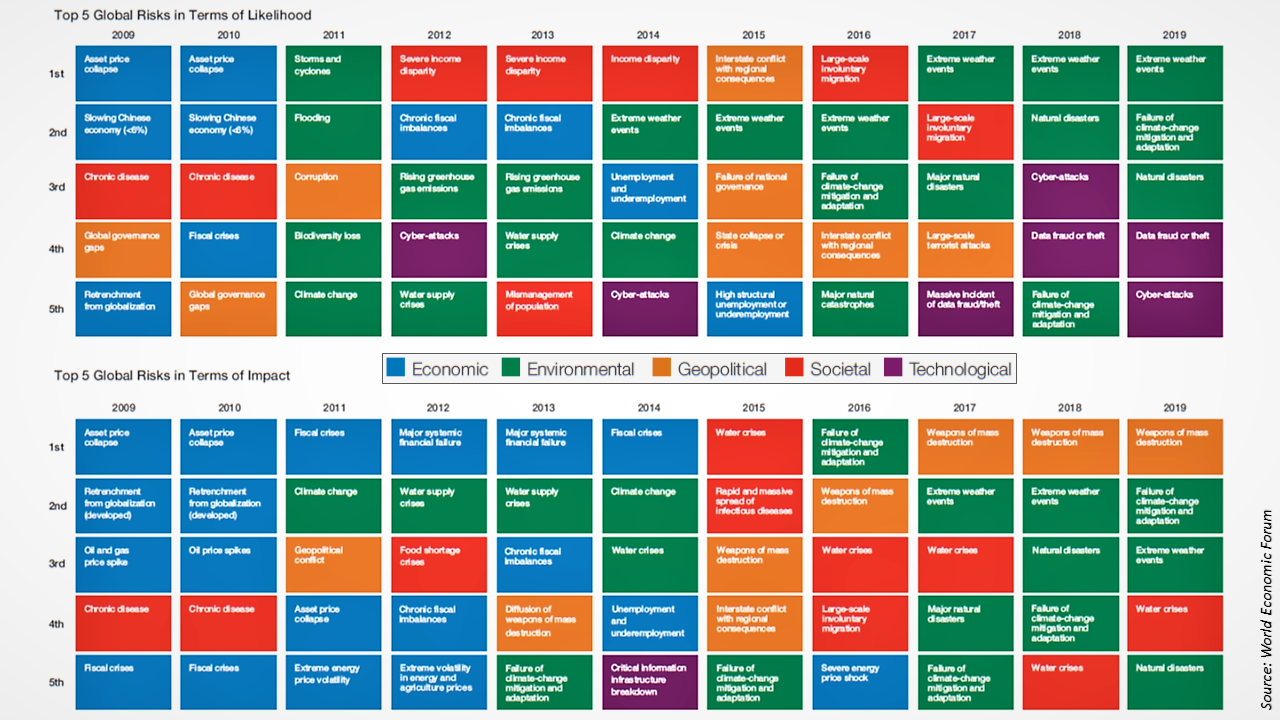
As is now customary ahead of Davos week, the latest World Economic Forum report on global risks was released and the usual graphic of the top 5 global risks in terms of likelihood and impact are reproduced below. Environmental risks and technology risks again dominate the likelihood list which is indicative of the current consensus. As this post highlights, the likelihood of irreversible climate change within the next 10 to 20 years is the short, medium and long-term issue of our times.

Although the report does state that “geopolitical and geo-economic tensions are rising among the world’s major powers” and that these “tensions represent the most urgent global risks at present”, I was somewhat surprised to see that geopolitical risk did not make the top 5 likelihood list this year. Despite the current market (wishful in my view) thinking of a kick the can down the road fudge outcome, Brexit in 2019 may result in a constitutional crisis in the UK or the possibility of a large portion of the population being alienated by a possible rushed outcome this Spring (e.g. hard Brexit or permanent custom union). His Orangeness and his ability to flame division, whether internally in the US after a bad Mueller report or against China to deflect from his pitiful negotiating style, are ever present possibilities for 2019 (if not hopefully remote ones). Although maybe somewhat alarmist, I can’t but help worry that his reign may end with some form of violent turmoil, he will not go quietly!

As an aside, the wonderful TV show “Brexit: The Uncivil War” from the UK’s Channel 4, which I think is on Netflix now, does raise the issue of how democracies will operate in a world where all sides can use technology to manipulate a (potentially decisive) disengaged minority to the political extremes. If the long-term success of democracy is dependent upon compromise, then we may be in trouble. Pundits say the implications of Brexit politics is a break from the traditional left/right or conservative/liberal divide, into a much more complex mixture of differing tribes. In fact, I would highly recommend this video from Dominic Cummings, the main subject of the show, who ably explains the parameters of the new political landscape (if you don’t have the time to watch it all, watch a few minutes after the 15-minute mark on how they did it).

click to enlarge

One other item that caught my attention in the WEF report, in section 6 called Open Secrets, was the assertion that when “the huge resources being devoted to quantum research lead to large-scale quantum computing, many of the tools that form the basis of current digital cryptography will be rendered obsolete”. The article further asserts that “public key algorithms, in particular, will be effortlessly crackable” and, under certain scenarios, “a collapse of cryptography would take with it much of the scaffolding of digital life”. Do I hear a new arms race approaching? The report predicts “as the prospect of quantum code-breaking looms closer, a transition to new alternatives—such as lattice-based and hashbased cryptography—will gather pace” although “some may even revert to low-tech solutions, taking sensitive information offline and relying on in-person exchanges”. Imagine having to rely on people meeting other people to get things done……..unthinkable!